



By Ana R. Delgado, HopTraveler European Correspondent
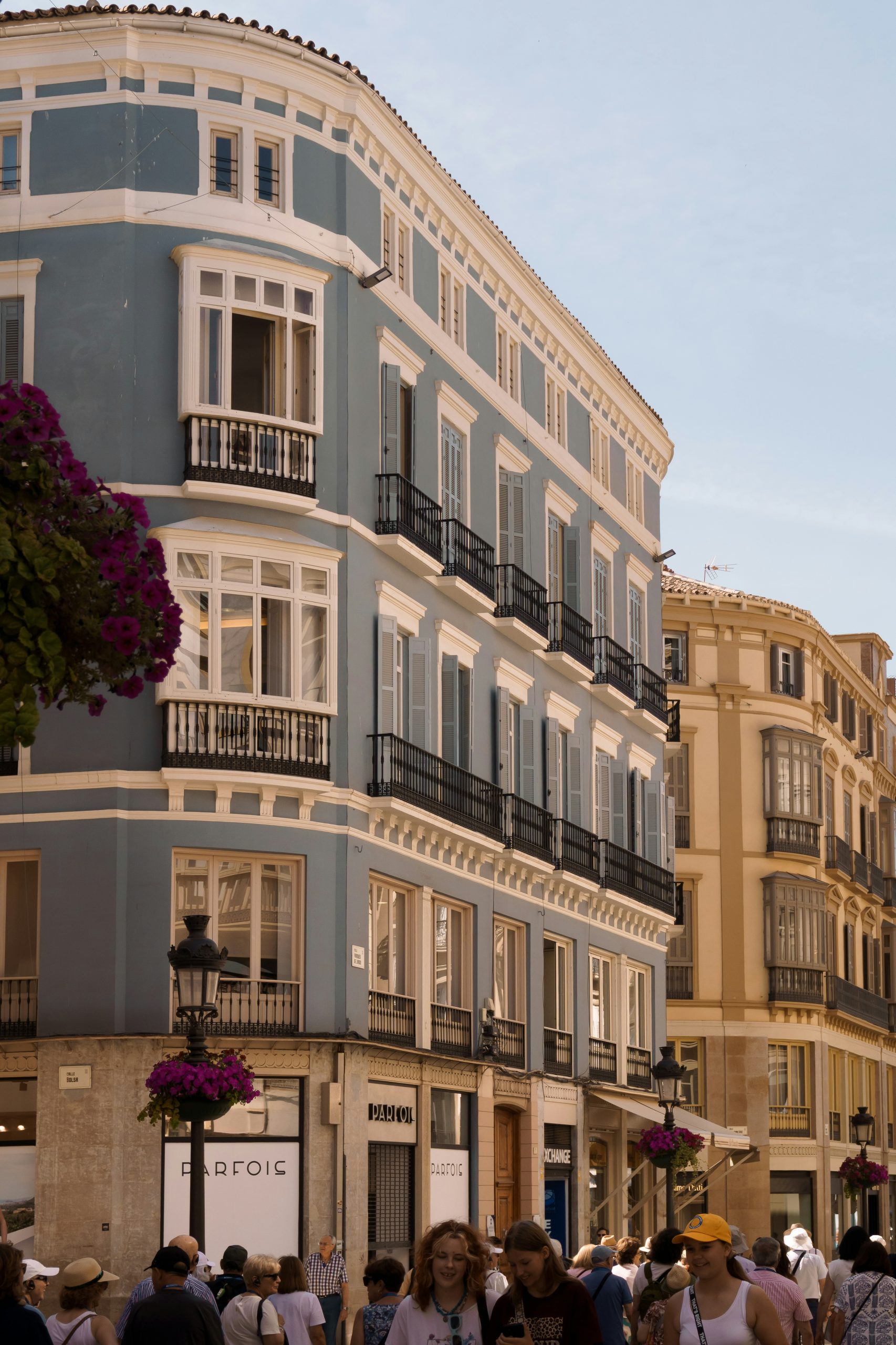
Dateline: SEVILLE, Spain – It was 11 p.m. when I finally found a table at a tapas bar in Seville’s Santa Cruz neighborhood. The alley was a river of human flesh. A couple from Toronto was arguing over the last jamón ibérico tapa. A family from Melbourne was trying to get their jet-lagged toddler to stop licking a salt shaker. And behind the bar, Antonio, the owner, looked like a man who had just survived a hostage crisis.
“I’ve worked Semana Santa, I’ve worked the World Cup,” he shouted over the hiss of a deep fryer, not pausing his frantic pouring of Cruzcampo beers. “This is different. This is August in April.”
He’s right. And the reason is something no tourism board would put on a poster.
You won’t see this in the glossy brochures. But a perfect storm—one involving a widening conflict in the Middle East, specifically the recent escalation of tensions involving Iran and its proxies—has reshaped the summer travel map of 2025. The beaches of the Algarve, the plazas of Lisbon, and the alleys of Granada are bursting at the seams. Not because of the sun (though that helps), but because the rest of the world suddenly feels like a no-fly zone.
This is the story of the war nobody is talking about on the beach.
The Cancellation Domino Effect
To understand why a retiree from Manchester is now sipping a port wine in Porto instead of a mint tea in Marrakech, you have to look at the airspace maps.
I spent the last two weeks calling tour operators across the Iberian Peninsula. The story is the same: Starting in late March, when skirmishes along the Strait of Hormuz escalated into a sustained exchange of drone and missile strikes, the travel industry pivoted faster than a Formula 1 driver.
“We saw a 40% spike in re-bookings to Portugal within 72 hours of the first reports of airport closures in Tehran,” says Mariana Fonseca, a crisis management specialist for Lisbon-based tour operator Luz Travel. “Not just from Iran-bound tourists. From everyone. Jordan, Egypt, even Turkey. Clients saw ‘Middle East escalation’ on their news feed and hit the panic button.”
The math is brutal but simple. When Iran-backed militias began threatening shipping lanes and neighboring nations tightened their borders, the trickle-down effect was immediate. Airlines that had planned summer routes through Dubai, Doha, and Istanbul began rerouting or canceling. Tourists who had booked the “Silk Road 2.0” or “Persian Gulf Luxury” packages woke up to emails from their insurers saying, “We’re sorry, but your destination is now a ‘high-risk zone.’”
Where do you go when the East closes? You go West. You go to the cheapest, sunniest, safest part of Southern Europe. You go to Iberia.
The Algarve’s Accidental Gold Rush
I drove down to the Algarve coast last Tuesday. Usually, late May is the “shoulder season”—warm enough to swim, quiet enough to hear your own thoughts. Not this year.
In Albufeira, I met Karl and Ingrid Schmidt, a retired couple from Düsseldorf. They had booked a four-week overland tour of Iran. They had their visas. They had their Farsi phrasebook. Then the German foreign ministry updated its travel advisory to “leave immediately.”
“We lost €3,000 on the deposit,” Karl told me, shrugging as a wave lapped at his ankles. “But we got a last-minute package here for half the price. It’s not Persepolis, but it’s sunny and there’s no air-raid siren.”
He laughed. It was dark humor, but it’s the mood of the summer. Tourists aren’t celebrating the war; they’re fleeing it. And the data proves it.
According to a preliminary report I obtained from the Spanish Ministry of Industry and Tourism, hotel reservations for the period of June through August 2025 are up 22% compared to the previous record year of 2019. The outliers? Long-haul travelers from Asia and Australia. Instead of doing the “grand tour” that includes Egypt or Jordan, they are tacking extra weeks onto Spain and Portugal.
“We were going to do two weeks in Greece and two weeks in Turkey,” said Priya, a tech consultant from Bangalore, whom I met at a pastel de nata shop in Belém. “Then Turkey started getting nervous about the refugee spillover from the Iran situation. Our airline changed our connection three times. So we said, forget it. We rented a car in Lisbon and we’re driving all the way to San Sebastián.”
The “Safe Sun” Premium
Here’s the irony that makes economists wince. The war in Iran is actually making a vacation to Spain and Portugal more expensive for locals, but more attractive for foreigners.
Because demand has spiked so suddenly, prices have followed. I checked booking.com while sitting in a café in Faro. A basic room that went for €80 a night last May is now €150. Rental car agencies are literally taping over old prices on their whiteboards because they can’t update the rates fast enough.
But for the international traveler comparing options, it still feels like a bargain. When you cancel a trip to the Seychelles (which is now nervous about naval activity in the Indian Ocean) and re-route to the Costa del Sol, you’re saving money and gaining peace of mind.
“We call it the ‘Safe Sun Premium,’” explains Javier Ortiz, an economist who tracks tourism trends for the University of Barcelona. “The conflict has created a bifurcated market. High-risk destinations like Israel, Lebanon, and now Iran are effectively dead for Western leisure travel. Medium-risk places like Morocco and Jordan are seeing sharp declines. All that volume has to go somewhere. The Iberian Peninsula has the infrastructure, the climate, and the perception of absolute safety. It’s the ultimate hedge against geopolitical chaos.”
The Human Cost of the Crowds
Of course, not everyone is celebrating.
I sat down with Sofia Andrade, the owner of a small guesthouse in the Alfama district of Lisbon. Her family has run the place for three generations. She should be thrilled about 100% occupancy. Instead, she looks exhausted.
“I’ve had to turn off online booking because my staff quit,” she said, pouring me a glass of vinho verde. “Two of my cleaners went back to Brazil. I can’t find dishwashers. And the guests? They’re stressed. They’re not the relaxed summer tourist. They’re refugees from a canceled dream. They came here because their first choice got bombed. They’re grateful, but they’re also anxious. They keep asking me if the Wi-Fi is fast enough to watch the news.”
That’s the quiet tragedy of this boom. You can hear it in the conversations. At a flamenco show in Seville, I sat next to a woman from Ohio who was scrolling through live updates from the Gulf on her phone while a guitarist played rumba. She wasn’t ignoring the art. She was checking if her son’s naval deployment had moved.
Travel, in 2025, is no longer just about escape. It’s about triage.
How Local Businesses Are Adapting
The savviest businesses in Spain and Portugal have realized that they aren’t just selling sun and sangria this summer. They’re selling therapy.
In the Algarve, I found a surf school that has rebranded its evening sessions as “Sunset Detox for the Anxious Traveler.” In Madrid, a tour guide named Carlos has pivoted from “The Habsburgs Tour” to “Hidden Courtyards: Silent Spaces for Overstimulated Minds.”
“People don’t want to talk about politics,” Carlos told me as we walked past the Royal Palace. “But they want to feel like the ground isn’t moving. I had a couple last week who fled their tour of Cyprus when a naval exercise was mistaken for an attack. They literally cried when I took them to a quiet garden because there were no helicopters overhead.”
This is the new reality. The war in Iran isn’t a distant headline on a bar TV anymore. It’s a spatial force. It pushes bodies. It reroutes airplanes. It changes the smell of the air in Lisbon, which this summer smells less like grilled sardines and more like sunscreen and repressed anxiety.
The Long View: What Happens in September?
I asked every hotelier, economist, and bartender the same question: Is this sustainable?
The answer is a collective shrug.
The war shows no sign of de-escalating. The US and European navies are still present in the region. The airline industry is still avoiding certain corridors. For the rest of 2025, Spain and Portugal will continue to be the overflow parking lot for global tourism.
But there’s a ticking clock. The sheer volume is straining infrastructure. The Lisbon airport, already a chaotic mess, is now a living nightmare. I spent 45 minutes in a security line last week—in May. August will be apocalyptic.
“We’re going to have a breaking point,” admits Mariana Fonseca, the tour operator. “The tourists are happy because they’re safe. But if the water runs out in the Algarve or the grid fails in Madrid during a heatwave because of the extra load? That safety perception vanishes overnight.”
The Last Night
It’s late now. I’m back in my hotel room in Seville, typing this by the light of a streetlamp that filters through the shutters. Down in the street, I can hear a group of American college students doing a bad karaoke version of “Livin’ la Vida Loca.” Two blocks over, a British couple is arguing about whether to extend their stay or try for Morocco anyway.
Nobody is talking about Iran. But Iran is the reason they are all here.
This summer, the beaches of the Algarve and the plazas of Madrid have become an accidental refuge. They are not the destination anyone planned. But in a year when half the world’s map turned red, the quiet, stubborn blue of the Iberian coast is the only color that feels safe.
And so the tourists keep coming. Not for the architecture. Not for the food. But because the only alternative was staying home, and nobody wanted to do that.
— Ana R. Delgado is a freelance journalist covering tourism, geopolitics, and the strange ways they collide. She is currently based in Seville, where she has not yet found a quiet tapas bar.
Sidebar: Tips for HopTravelers Heading to Spain/Portugal This Summer
- Book dinner reservations now. Restaurants are slammed. The “eat at 10 PM” rule doesn’t apply when there’s a line at 9:30.
- Avoid Lisbon Airport on weekends. It’s a bottleneck. Fly into Faro or Porto and take the train if you can.
- Be kind to service staff. They are doing the work of two people. Tip in cash.
- Don’t mention the war. Seriously. Locals know why you’re here. They don’t need to be reminded that their home is your Plan B.
- Embrace the chaos. You came to Spain for passion and Portugal for soul. The crowds are just part of the story. Buy a fan. Drink a tinto de verano. And be grateful you’re not in a hot zone.