



Janet Pryce, a 58-year-old retired radiographer from Shrewsbury, has taken fourteen big-ship cruises since 2004. Her first sailed out of Southampton with 2,600 passengers aboard, and she spent most of the first evening lost on deck nine looking for her cabin. She’s done the Norwegian fjords twice and the Caribbean three times, and she knows the buffet hours on most major lines by heart. So when her niece, a diver, suggested a few nights on a small boat in Indonesia, Janet treated it as a straight comparison. She wanted to know whether a Komodo liveaboard would give her the same value as the cruises she already loved.
The boat carried fourteen guests. Janet counted them on the first evening, out of habit.
What struck her first was how differently the trip moved. Komodo’s underwater landscape cannot be fully understood from a single anchorage, and Komodoresort.com’s liveaboard diving itineraries reflect the region’s geography, where exploring distant reefs often means spending as much time navigating the islands as diving beneath them. On a big ship, the sea is mostly the space between ports, crossed overnight while everyone sleeps. Here the islands were the itinerary. The boat moved two or three times a day, sometimes for twenty minutes and sometimes for two hours, and almost every stop was a reef or a beach.
What a Cruise Fan Gives Up
Janet’s first true list was the things she was missing. On a small ship, there is no theatre or lift. The dining room is a communal table on the deck. Janet noticed that there was no elevator the first day when her cabin was located down a wooden ladder (the crew called it a staircase, which seemed to be an overstatement). The communal table won her over more quickly, as by the second night, she had learned the name of every guest on board and where they had been in the water that morning.
- Space, mostly.
- A choice of restaurants.
- The cabin was a fraction of the size of her usual balcony cabin, which mattered more on the first night than on the last.
The Suitcase
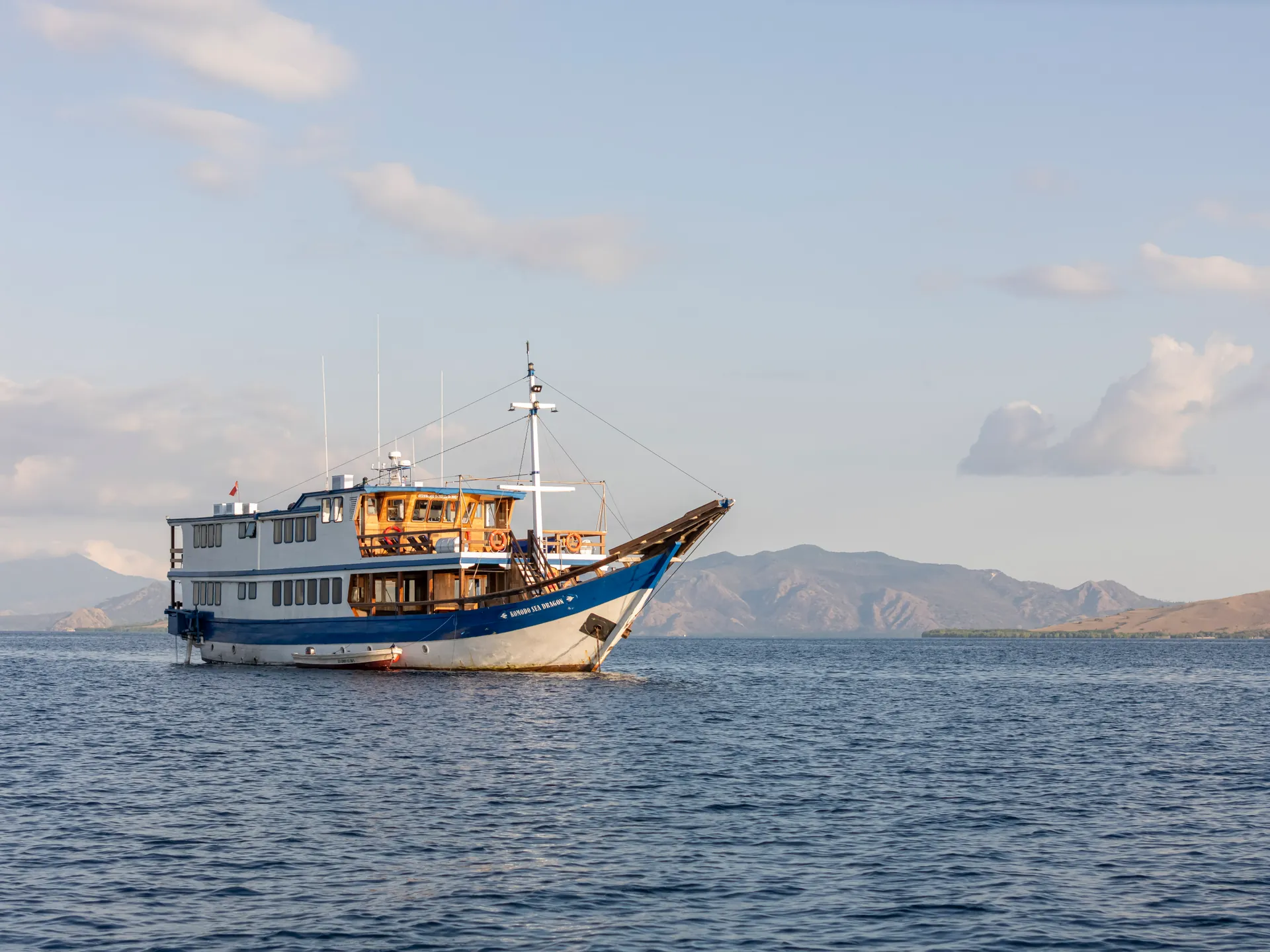
Janet had booked four nights on the Komodo Sea Dragon liveaboard, one of the wooden boats that sail out of Labuan Bajo, and she packed the way she always packs for a cruise. That meant her 23-kilogram hard-shell suitcase and two dresses for formal nights. She boarded on Saturday 3 October 2026, at about half past three in the afternoon. The suitcase didn’t fit through the cabin door at an angle, and once inside it wouldn’t lie flat on the floor. One of the crew, a young man called Komang, carried it forward to a storage locker in the bow and gave her a canvas bag for whatever she needed. She lived out of that bag for four days. The dresses never came out of the suitcase. Later that evening she found the packing list the boat had emailed her in August, and it asked for soft bags only, in bold type near the top.
She still isn’t sure whether she’d have packed differently if she’d read it.
What She Got Instead
Value was found where Janet had not expected. On a large cruise ship, excursions are the most expensive part of the journey, and they are booked individually at the tour desk. Everything that Janet would have paid extra for onboard was included in the price. She could go snorkeling twice a day and go on a Komodo dragon walk with a ranger. It also included sunrise trekking on Padar Island. The cruise director, a calm Flores man named Yohanes, altered the plan two times out of four days because of the current. No one seemed to care. The Komodo liveaboard and diving team also offered her a chance to try diving under supervision with the boat’s dive instructor in a protected bay on the third day (Janet spent twenty-two minutes at about six meters and surfaced grinning).
- Eleven snorkels in four days.
- Excursions included in the fare.
- A night at anchor in a bay with no other boats in sight.
- A crew of twelve for fourteen guests.
- Her meals were cooked a few meters from where she ate them, which no cruise ship buffet has ever managed for her.
Short side story. Janet loves reading the daily schedule that is slipped under her door each night on her cruises, but on this particular trip she was missing that. On the second evening, she decided to take advantage of some extra dive logs by writing a schedule for the next day on the back of the dive log. She listed the sights that the cruise director would be announcing over dinner. Her niece still has it, in her passport wallet.
The Value Question
Janet’s cost per night was much higher than the cost of a balcony room on a large cruise ship. However, the difference is not clear after accounting for excursions. Janet’s niece, who had been studying the best liveaboard Komodo options for months before booking the cruise, told her that a cruise price usually does not include excursions. For example, during her last Caribbean cruise, she had paid GBP 89 to snorkel from a catamaran and GBP 64 to hike through a rainforest. On balance, Janet felt a mix of opinions. She still prefers cruising on large ships for their comfort and choice, but for getting a close-up view of teh sights, she liked the boat better than any of her excursions.
- Cruise fans who want comfort above all should stay on the big ships.
- Those who’d rather be in the water than on a sun lounger might find a Komodo island liveaboard better value, because nearly everything that costs extra on a cruise comes in the price.
Her niece wants to visit Komodo next year. Janet has already expressed interest in joining if the boat does the try-dive again. If you’re going to take a small boat, always read the operator’s packing list twice and take s soft bag.