



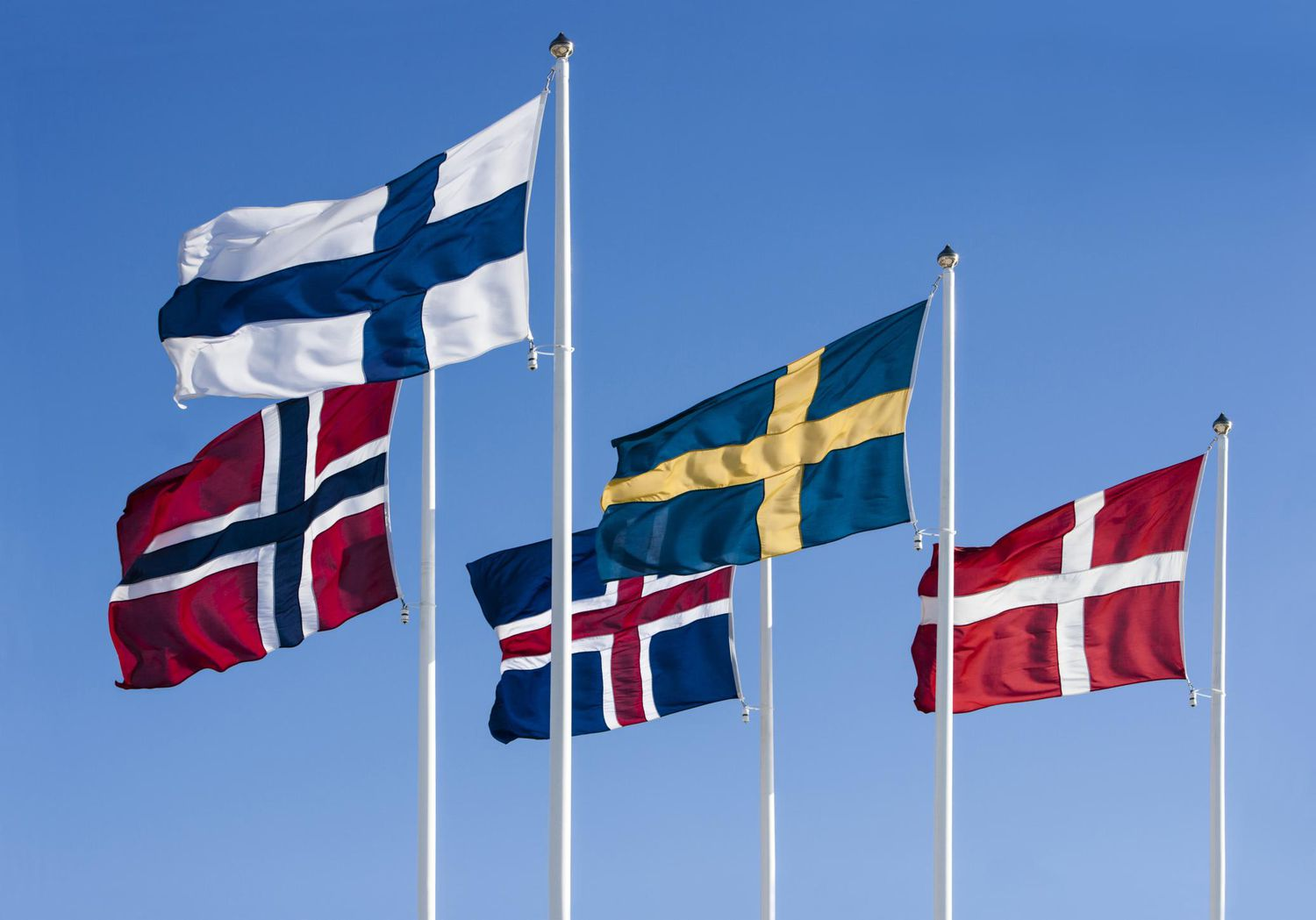
The terms Scandinavian and Nordic are frequently used as if they describe the same region. In everyday English — especially in the United States — many people refer to all Northern European countries as “Scandinavian.” However, in geographic, linguistic, and political contexts, the distinction between these two terms is clear and important.
Although the countries of Northern Europe share many similarities in culture, governance, and social development, the words Scandinavian and Nordic describe different groupings. Recognizing this distinction allows for more precise communication in academic writing, journalism, international relations, and cultural analysis.
What Is Scandinavia?
When planning a trip to Northern Europe, travelers often encounter both terms — “Scandinavian” and “Nordic” — in tour descriptions and itineraries. The difference matters in practice: knowing which countries fall under each label helps travelers understand exactly which destinations are included in a specific itinerary. Tour operators specializing in the region, like https://nordicsaga.com/, build their multi-country programs around these precise geographic definitions — which is why the distinction is worth understanding before you book.
Scandinavia traditionally refers to three countries:
- Denmark
- Norway
- Sweden
These three nations form the historical and linguistic core of the region.
Linguistic Foundation
Language is one of the strongest defining elements of Scandinavia. Danish, Norwegian, and Swedish all belong to the North Germanic branch of the Indo-European language family. These languages evolved from Old Norse and retain high levels of mutual intelligibility.
A speaker of Swedish can generally understand written Norwegian and much of spoken Danish, and vice versa. This linguistic closeness reinforces the idea of Scandinavia as a cultural and historical unit rather than simply a geographic label.
Because of this shared linguistic heritage, the term “Scandinavian languages” refers specifically to Danish, Norwegian, and Swedish — not to Finnish or Icelandic in the strict sense.
Geographic Context
Geographically, the Scandinavian Peninsula includes Norway and Sweden. Denmark is located south of the peninsula on the Jutland Peninsula and surrounding islands. Despite this, Denmark is considered fully Scandinavian due to its historical and linguistic alignment with Norway and Sweden.
In formal academic usage, Scandinavia includes only these three countries, even though popular media sometimes uses the term more broadly.
What Are the Nordic Countries?
The term Nordic countries refers to a broader regional grouping in Northern Europe. It includes:
- Denmark
- Norway
- Sweden
- Finland
- Iceland
In addition, the Nordic region encompasses autonomous territories such as Greenland and the Faroe Islands (associated with Denmark) and Åland (associated with Finland).
Unlike “Scandinavia,” which emphasizes shared linguistic and historical roots, “Nordic” is primarily a political and regional term. It reflects structured cooperation among these countries in areas such as economics, legal harmonization, education exchange, environmental sustainability, and regional security dialogue.
The Nordic countries maintain formal institutions for collaboration and often coordinate policy positions in international organizations. This regional framework strengthens their collective identity and reinforces the broader Nordic label.
The Core Difference Explained
The distinction can be summarized clearly:
- Scandinavia = Denmark, Norway, Sweden
- Nordic region = Scandinavia + Finland + Iceland
In other words, Scandinavia is a subset of the broader Nordic region.
The key difference lies in the basis of classification. Scandinavia is defined primarily by linguistic and historical ties, while Nordic is defined by geographic scope and structured regional cooperation.
Why the Terms Are Often Confused
In American English and global media, “Scandinavian” is often used as a general label for Northern Europe. Travel guides, lifestyle publications, and popular commentary frequently apply the term loosely to include Finland and Iceland.
There are several reasons for this confusion:
- The countries share similar welfare-state models and high standards of living.
- They rank similarly in global indexes of education, governance, and quality of life.
- They cooperate closely in regional institutions.
- They are geographically close and culturally comparable in many respects.
Because of these similarities, the distinctions between the countries may seem less significant to outside observers. However, from a geographic and academic perspective, accuracy remains important.
Cultural Similarities Across the Nordic Region
Despite differences in terminology, the Nordic countries share notable structural and social characteristics. They are known for strong democratic institutions, high levels of public trust, transparent governance, and comprehensive social welfare systems.
The concept of the “Nordic model” is frequently discussed in political and economic analysis, referring to the region’s combination of competitive market economies with robust social protections and progressive taxation systems. These shared characteristics contribute to the perception of unity across the region.
Still, cultural proximity does not eliminate linguistic and historical distinctions.
Linguistic and Historical Distinctions
The most significant distinction concerns language.
Finland
Finland’s primary language, Finnish, belongs to the Finno-Ugric language family. It is not related to Danish, Norwegian, or Swedish. This linguistic difference is fundamental and historically significant.
Although Swedish is also an official language in Finland, the country’s linguistic foundation differs from that of Scandinavia. This is a primary reason Finland is classified as Nordic but not Scandinavian.
Iceland
Icelandic belongs to the North Germanic language group and is historically related to Old Norse. However, it developed in relative isolation and retains more archaic grammar and vocabulary compared to mainland Scandinavian languages.
While Iceland shares linguistic ancestry with Scandinavia, it is not traditionally grouped under the term “Scandinavia.” Instead, it belongs to the broader Nordic category.
Academic vs Informal Usage
In formal academic writing, international relations, and geographic scholarship, the distinction between Scandinavian and Nordic is clearly maintained.
- Use “Scandinavian” when referring specifically to Denmark, Norway, and Sweden.
- Use “Nordic” when referring to the five-country regional grouping.
In casual conversation, the terms are sometimes used interchangeably. However, precision enhances clarity, particularly in professional or educational contexts.
Scandinavian vs Nordic: Why the Distinction Matters
The difference between Scandinavian and Nordic lies in scope and definition.
Scandinavia refers specifically to Denmark, Norway, and Sweden — countries united by closely related North Germanic languages and shared historical development.
The Nordic region includes those three countries plus Finland and Iceland, reflecting a broader framework of geographic and political cooperation.
Understanding this distinction allows for more accurate discussion of Northern Europe and demonstrates awareness of the region’s linguistic, cultural, and historical complexity.