



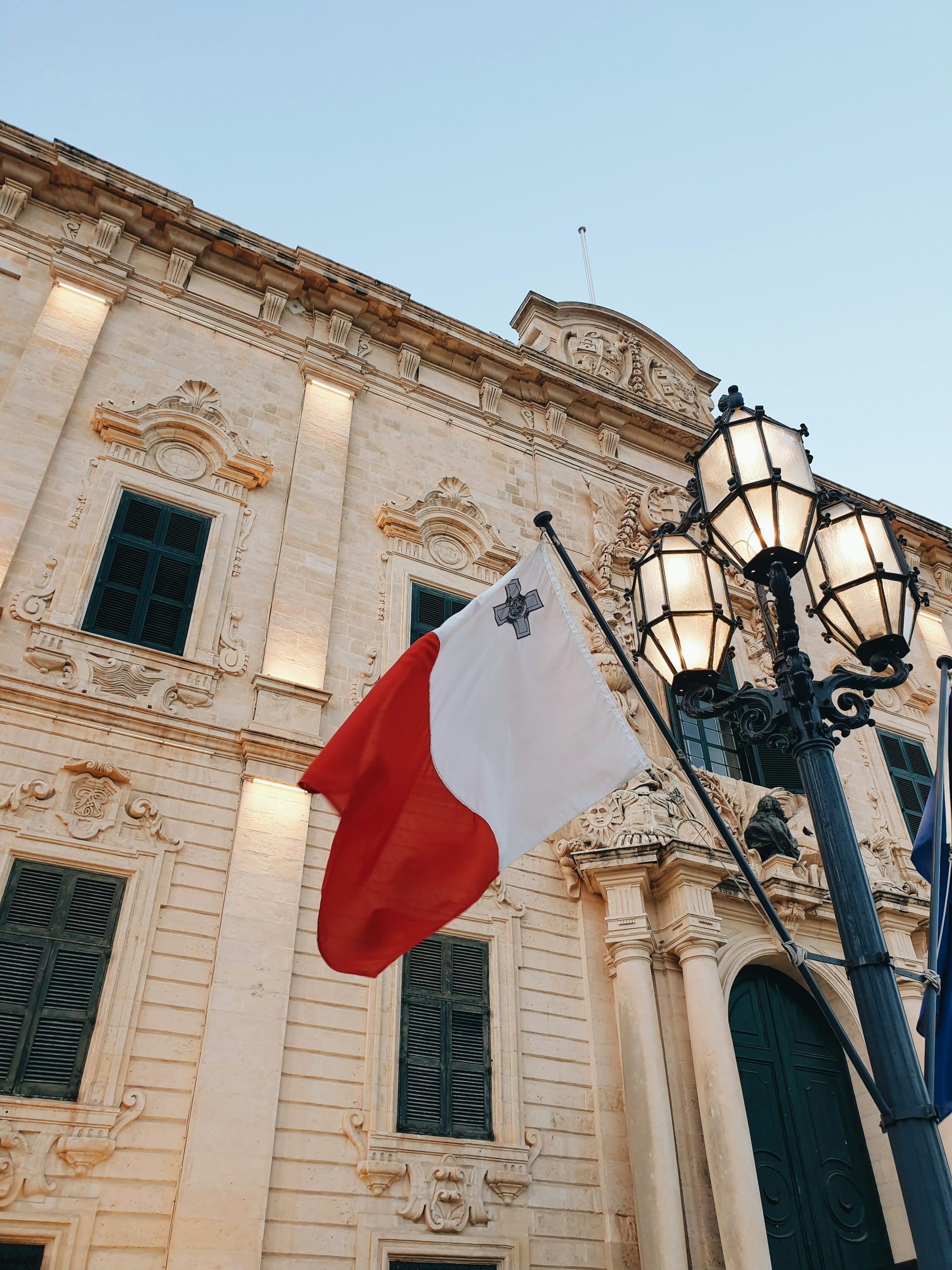
Or: How to Eat Rabbit, Dodge VAT, and Convince Yourself You’re Being Productive
Malta often feels like a secret whispered among travelers—usually followed by the words “tax haven” and “please don’t tell everyone.” In four days, you can explore prehistoric temples older than the pyramids, dive into lagoons so blue they’d make a Smurf jealous, wander silent cities where the loudest thing is your own imposter syndrome, and feast on a cuisine that proves the Knights of St. John had excellent taste in literally everything except hygiene. But let’s be honest, you’re not here for the history. You’re here because someone on a YouTube video with aggressively upbeat music told you Malta is a “digital nomad paradise with zero taxes.”
Spoiler alert: They lied. Sort of. But also… maybe not entirely? Grab a pastizz (€0.70, will change your life), and let’s sort this out.
Part 1: The Perfect 4-Day Malta Itinerary (For People Who Should Be Working)
Malta is 27 kilometers long—smaller than most people’s daily commute in Los Angeles, which means you have zero excuse not to see everything while pretending to answer Slack messages. This itinerary balances adventure, history, relaxation, and enough Wi-Fi to make your boss think you’re at your desk.
Day 1: Valletta’s Grandeur and Three Cities Charm (Plus Pretending to Check Emails)
Start your journey in Valletta, the fortified capital built by the Knights of St. John in the 16th century. These guys had serious commitment issues; they built a city so dense with history that UNESCO basically just gave up and declared the whole thing a heritage site.
Morning (9 AM – “Working” from a café):
Find a café with Wi-Fi (hint: all of them) and send three emails while staring dramatically at the Mediterranean. This counts as productivity. Then, actually go see St. John’s Co-Cathedral, which looks modest from outside—like a church that peaked in high school—but inside explodes into so much gold and marble that you’ll understand where all the Knight’s crusade funding actually went. The floor alone holds 400 inlaid marble tombstones. Caravaggio’s masterpiece The Beheading of St. John the Baptist hangs here, and fun fact: Caravaggio was a literal murderer on the run when he painted it. Your freelance deadlines suddenly feel less stressful.
Pro tip for digital nomads: The Upper Barrakka Gardens have free Wi-Fi and a view so good that your Zoom background will make everyone in your team meeting irrationally jealous. The cannon fires at noon. Do not be on a call then unless you want your colleagues to think you’re in a war zone.
Afternoon (Pretending the 2 PM meeting never happened):
Take a traditional dghajsa boat (€2, cash only, the boatman has heard your “do you take card?” joke 47 times today) across the harbor to the Three Cities: Vittoriosa, Senglea, and Cospicua. These are quieter than Valletta, meaning fewer tourists and more elderly Maltese men staring at you for wearing socks with sandals. Wander Birgu’s narrow streets, visit Fort St. Angelo, and appreciate how this tiny peninsula survived the Great Siege of 1565. The Wi-Fi here is spotty, which is actually a gift from the universe—no one can ask you for that spreadsheet.
Evening:
Dinner at Tas-Soli – Kċina Maltija in Valletta. Order rabbit stew. Remind yourself you’re “experiencing local culture,” not just avoiding the sad pasta you’d make at your Airbnb.
Digital nomad productivity score: 3/10. You saw things, but your inbox now has 14 unread messages. Worth it.
Day 2: The Blue Lagoon, Caves, and Fishing Village Splendor (Aka Your Coworking Space Has Nothing on This)
Today is about Malta’s famous blue waters—which, yes, are actually that blue. It’s not a filter. It’s science (and also limestone, but we’re here for vibes).
Morning (The “I’ll work twice as hard tomorrow” special):
Book a boat tour to the Blue Lagoon on Comino Island. Many day tours cost under €30 and include multiple stops. The water is so clear you can see your own future regrets about not moving here sooner. It gets crowded by 11 AM, which is perfect because you can blame the lack of Wi-Fi for not finishing that client project.
Confession: There is no Wi-Fi at the Blue Lagoon. This is either a nightmare or a liberation, depending on how much you hate your current project. We recommend embracing the chaos and just floating.
Afternoon (Lunch with a side of “I should really check my phone”):
Skip the overpriced lagoon snack bars and head to Marsaxlokk by lunch. This traditional fishing village is famous for its luzzus—colorful Maltese fishing boats with painted eyes on the bows. Local legend says the eyes ward off evil. Modern digital nomads say the eyes ward off landlords asking for rent. The waterfront restaurants serve the freshest seafood on the island, and lampuki pie (mahi-mahi pie, available August-November) will make you forget every sad desk lunch you’ve ever eaten.
Evening:
Visit St. Peter’s Pool near Marsaxlokk—a natural swimming pool where locals cliff-jump. Watch from a safe distance unless you have travel insurance that specifically covers “stupid decisions made in front of attractive Europeans.”
Digital nomad productivity score: /10. You didn’t open your laptop once. You did, however, get a sunburn that will make future Zoom calls look like you’re blushing at everything your boss says.
Day 3: Mdina, Rabat, and the Silent City (Aka The Best Coworking Space You’ve Never Considered)
Leave the coast behind and explore inland Malta, where medieval walls and Roman history await—and where the Wi-Fi is surprisingly decent.
Morning (The “I’ll work from a castle” flex):
Visit Mdina, the ancient capital known as the “Silent City.” It’s called that because no traffic is allowed inside except for residents’ cars, which means the loudest thing you’ll hear is your own internal screaming about that passive-aggressive client email. Walk through Mdina Gate (Game of Thrones fans, yes, they filmed here—no, you cannot buy a dragon) and find a café with Wi-Fi. Send exactly two emails. Spend the rest of the morning getting lost in the narrow streets. The view from the bastions lets you see most of the island, which is useful for planning which café to work from tomorrow.
Afternoon (Pastizzi break, aka the only reason to work):
Walk next door to Rabat (literally “suburb” in Arabic) and visit Crystal Palace Bar (also called is-Serkin), a no-frills kiosk just outside Mdina’s walls. This place has been serving pastizzi since before your grandparents were born. Pastizzi are flaky, golden puff pastries filled with ricotta or mashed peas. They cost €.70. You will eat four. You will not regret it. The seating is plastic chairs on gravel. The service is grumpy. This is authenticity, baby.
Digital nomad pro tip: Work from Crystal Palace for an hour. The Wi-Fi works, the coffee is €1, and no one will bother you because the owner has seen ten thousand tourists and cares about exactly zero of them. You are not special here. It’s liberating.
Evening:
Climb Mosta Rotunda—one of Europe’s largest unsupported domes. During WWII, a bomb fell through the roof during Mass and didn’t explode. The congregation finished the service because Maltese people are either very faithful or very committed to not wasting a Sunday. You decide.
Digital nomad productivity score: 6/10. You answered emails. You ate pastizzi. You are basically a functional adult.
Day 4: Gozo—The Slower, Greener Island (Aka Where You’ll Accidentally Decide to Move)
Many travelers skip Gozo due to time constraints. Many travelers are cowards. Gozo is where Malta keeps its soul, its oldest temples, and the best swimming holes in the Mediterranean.
Morning (The 8 AM ferry is a test of character):
Take the car ferry from Cirkewwa (€4.65 round-trip for walk-ons, runs 24/7, infinitely more comfortable than the speedboat unless you enjoy vomiting into a complimentary paper bag). The ferry takes 25 minutes. Use this time to stare at the sea and ask yourself: “Could I actually live here?” The answer is probably yes, and that’s terrifying.
Afternoon (Temples older than Egypt):
Visit the Ġgantija Temples, which predate the Egyptian pyramids by over 1,000 years. These megalithic structures date to 360 BCE. The name “Ġgantija” means “giant’s tower” because locals believed only giants could move stones this big. Modern digital nomads believe only people with no deadlines could spend 1,000 years building something this beautiful. For swimming, the Blue Hole and the Inland Sea near Dwejra offer some of Gozo’s best natural pools. The famous Azure Window collapsed in 2017, but the snorkeling is still spectacular.
Evening (The return to reality):
Take the ferry back. You will spend the entire ride looking at property listings on your phone. This is normal. We do not judge.
Digital nomad productivity score: Negative 5/10. You started a spreadsheet titled “Malta Relocation Cost Analysis.” You have not told your landlord yet. You will.
Part 2: What to Eat in Malta (A Culinary Journey That Will Ruin Your Meal Prep)
Maltese food is Mediterranean comfort food at its finest—blending Italian, North African, and British influences into something uniquely delicious. It’s also cheap enough that you’ll stop pretending to cook at your Airbnb after day one.
The National Dish: Rabbit Stew (Stuffat tal-Fenek)
Rabbit is to Malta what pasta is to Italy—ubiquitous, beloved, and slightly terrifying to Americans who grew up watching Bugs Bunny. Slow-cooked with wine, tomatoes, and garlic until it falls off the bone, stuffat tal-fenek tastes like freedom. Literally: during the Knights’ rule, hunting rabbit was restricted to nobility. When the ban lifted, rabbit became a symbol of Maltese independence. Eating it is basically patriotism with a fork.
Where to get it: La Pira Maltese Kitchen or Rubino in Valletta (open since 1906, older than your entire family line’s presence in America).
Street Food Heroes: Pastizzi and Ftira
Pastizzi (€.70) are Malta’s greatest contribution to global cuisine. Flaky, golden puff pastry filled with ricotta (pastizzi tal-irkotta) or mushy peas (pastizzi tal-piżelli). They are sold everywhere: bakeries, bus stops, gas stations, airports, possibly from a man on a bicycle if you believe hard enough. Crystal Palace in Rabat is the holy grail. Sphinx Pastizzeria in Valletta is open 24 hours, which is dangerous information for anyone with impulse control issues.
Ftira is Malta’s answer to pizza, except it’s better because UNESCO said so (literally—ftira baking is recognized as intangible cultural heritage). It’s a chewy, slightly hollow flatbread topped with tuna, capers, olives, onions, tomatoes, and gbejniet (sheep’s cheese). Eat it for lunch. Eat it for breakfast. Eat it at 3 AM after too much Cisk lager. No judgment.
Seafood Specialties (For When You Feel Fancy)
Lampuki pie (mahi-mahi pie) is a seasonal treasure (August-December) that combines fish with spinach, cauliflower, capers, and olives under a golden pastry crust. Marsaxlokk’s waterfront restaurants serve the best version. Aljotta is a garlicky fish soup that will cure whatever ails you—cold, breakup, existential dread, you name it.
Cheese, Preserves, and Sweets (The Real Reason to Stay)
Ġbejniet (pronounce it “jib-bay-nyet” and watch locals either be impressed or laugh at you) are small sheep’s milk cheeselets. They come fresh and soft (like mozzarella), sun-dried and peppered (firm and crumbly), or preserved in olive oil with herbs (soaked in flavor and excellent life choices). Bigilla is a thick bean dip made from tic beans, garlic, and parsley. It looks like mud. It tastes like heaven.
For sweets: Kannoli tal-Irkotta are Malta’s cannoli—crispy fried pastry tubes filled with sweetened ricotta. Imqaret are deep-fried date pastries flavored with aniseed, sold hot from street stalls for €1. Qagħaq tal-Għasel (honey rings) are Christmas treats named after honey but made with spiced black treacle, because Malta is a country that lies to you deliciously.
Drinks to Know
Cisk is Malta’s lager—crisp, refreshing, and €2 at most bars. Kinnie is the local soft drink: bitter orange and aromatic herbs. It’s aggressively divisive; you’ll either drink it daily or spit it out dramatically. No middle ground. For wine, Ġellewża (light red) and Girgentina (crisp white) come from indigenous grapes you literally cannot find anywhere else on Earth. Drink them while smugly texting your wine-snob friends.
Part 3: Is Malta a Tax-Free Paradise? (The Honest, Slightly Devastating Answer for Digital Nomads)
Okay, let’s address the elephant in the coworking space. You’ve seen the TikTok videos. The thumbnails with “I PAY ZERO TAX IN MALTA” written in flashing red letters. The YouTube bros with espresso in one hand and a laptop in the other, claiming they’ve hacked the system.
Here’s the truth: Those people are either lying, incorporated a Maltese company (different legal entity), or are about to have a very uncomfortable conversation with the Maltese tax authority.
The Short Answer That Will Make You Sad
No, Malta is not tax-free for digital nomads. If you work remotely from Malta for more than 183 days in a calendar year, you become a tax resident. This means you pay Maltese income tax on your worldwide income at progressive rates up to 35%. There is no “digital nomad visa” in Malta as of 2026. There is no “remote worker exemption.” There is no “if I get paid in crypto, it doesn’t count” loophole (spoiler: it counts).
But wait! Before you cancel your flight and go back to crying in a Bali hostel, here’s why people keep talking about Malta anyway.
Where the “Tax Haven” Reputation Comes From (And Why It Barely Helps You)
1. Corporate Tax Refunds (You don’t have a company. Stop reading this bullet point.) If you own a Maltese-registered company, you can pay 35% corporate tax then claim back 6/7ths of it, bringing your effective rate to 5-10%. This is great if you’re a hedge fund. If you’re a freelance graphic designer named Kevin, this is not for you.
2. The Malta Permanent Residence Programme (You have €300,000+ in property money. Do you?)
Non-EU nationals who buy property for €300k+ (or rent at €10k+/year) can get residency with favorable tax treatment. You still pay 15% tax on foreign income remitted to Malta. That’s not zero. That’s “less than France” but not “I’ve cracked the system.”
3. The “Five Years Tax-Free” Headline (May 2026 political fantasy)
In May 2026, Malta’s opposition party proposed letting young workers (under 35) earn up to €50k tax-free for five years. This is not law. It’s a proposal. The current government laughed at it politely the way you laugh at a friend who says they’re “definitely starting keto tomorrow.” Even if it passes, it applies to Maltese citizens who have lived in Malta for 10+ years—not you, Steve from Ohio.
4. No Wealth Tax, No Inheritance Tax (Okay, this one is real)
Malta genuinely has no annual wealth tax and no inheritance tax between close relatives. If you die and leave money to your kids, Malta won’t tax it. This is great for estate planning. This does not help you pay less tax on your Upwork invoices.
What About the EU Pensioners’ Scheme? (You’re not a pensioner. Stop.)
EU nationals can remit their foreign pension income to Malta and pay a flat 15% tax (minimum €15k/year). That’s genuinely attractive for retired doctors from Germany. That is not attractive for you, a 32-year-old who just spent €80 on a mechanical keyboard.
So What Actually Happens If You Move to Malta as a Digital Nomad?
Scenario A (You follow the rules): You register as self-employed in Malta. You pay income tax (progressive up to 35%). You pay social security (15% of net income). You pay VAT on everything you buy (18% standard rate). You sleep soundly knowing you’re a law-abiding citizen. Your bank account weeps quietly.
Scenario B (You try to “stay under the radar”): You enter as a tourist (90 days Schengen for non-EU citizens). You work remotely. You don’t tell anyone. You leave before 90 days. You do this twice a year. You live in constant fear of border agents asking to see your laptop. One day, they do. You get banned from Schengen for 5 years. You post a very sad TikTok about it.
Scenario C (You incorporate a Maltese company): You hire a Maltese accountant (€1k-2k/year). You set up a company (€1.5k setup fees). You pay yourself a salary (taxable). You leave profits in the company (taxed at 35%, then refunded to 5-10%). This works. It also costs thousands of euros and requires actual paperwork. You are now a business owner, not a digital nomad. Congratulations on your new identity crisis.
The Real Reason Digital Nomads Come to Malta (It’s Not Taxes)
Here’s the thing nobody on YouTube tells you: Malta isn’t a tax haven for normal people. It’s a lifestyle haven that happens to have lower taxes than some European countries.
Reasons to come to Malta as a digital nomad (tax-free or not):
- English is an official language. Your landlord, your barista, your accountant, and the grumpy pastizzeria owner all speak English. You will not accidentally order horse meat (probably).
- Fast internet. Malta has excellent fiber optic coverage. You can Zoom, stream, and upload massive design files without crying.
- Time zone wins. You’re in CET (GMT+1). You can work with US clients in their morning (your afternoon/evening) and European clients in real time. No 3 AM calls.
- Cost of living is reasonable. Not Bangkok-cheap, but cheaper than London, Paris, or NYC. A nice one-bedroom in Sliema: €900-1,200/month. Pastizzi: €.70. Beer: €2-3. You can live well on €2,000-2,500/month.
- The lifestyle is absurdly good. You can finish work at 5 PM and be swimming in the Mediterranean by 5:20 PM. You can take your laptop to a rooftop café in Valletta. You can spend weekends on Gozo feeling like you’re in a perfume commercial.
- Coworking spaces exist and they’re great. The Garage in Birkirkara, Zeta in Valletta, The Hub in Sliema—all have solid Wi-Fi, coffee, and fellow nomads who also pretend they understand Maltese tax law.
The One Actual “Tax Advantage” for Digital Nomads (It’s Small but Real)
Malta has no withholding tax on royalties, interest, or dividends paid to non-residents. If your income comes from intellectual property (e.g., you license software, music, or writing), you might structure things to benefit. You’ll need an accountant. You’ll spend €500 on advice. You’ll save maybe €2,000. This is not a hack; this is adult financial planning.
The Bottom Line (Read This Before Booking Your Flight)
For a tourist spending 4 days in Malta: Your tax exposure is the 18% VAT on your rabbit stew and hotel room. You don’t care. You’re on vacation. Eat another pastizz.
For a digital nomad considering a 3-6 month stay: You will not pay Maltese tax if you stay under 183 days and your income isn’t “sourced” in Malta (i.e., you don’t work for a Maltese company). This is the “tourist with a laptop” loophole. It’s legal. It’s common. It’s not “tax-free paradise”; it’s “not staying long enough to trigger tax residency.” Do this. Go home before 183 days. Everyone wins.
For a digital nomad considering permanent relocation: You will pay tax. Budget for 15-25% effective rate after deductions. Hire a Maltese accountant. Do not trust YouTube. Do trust the nice lady at the tax office who has seen 10,000 digital nomads try the same “but I heard it was tax-free” argument and has zero patience left.
For the person who just wants permission to move to Malta: Move here. It’s beautiful, the food is incredible, the internet works, and you can swim in December. Just pay your taxes like a grownup. The Maltese government is not dumb, and neither are you.
Part 4: The Digital Nomad’s Reason to Go (Even With Taxes)
Fine. You want a funny reason. Here it is.
Go to Malta because you’re tired of being asked “but where do you actually live?” by your parents.
Malta gives you an answer that sounds impressive (“I’m based in the Mediterranean”) without requiring you to learn a new language (everyone speaks English). It’s close enough to mainland Europe that you can pretend you’ll visit Rome “next weekend” (you won’t, but the option is nice). The coffee is good, the wine is cheap, and nobody will judge you for working from a beach bar because the entire country runs on “island time” and your clients will never know the difference between “I’m in a meeting” and “I’m floating in the Blue Lagoon with my laptop in a waterproof case.”
Plus, when things go wrong—and they will, because you’re a digital nomad and everything is held together by caffeine and anxiety—you can go eat a pastizz for €.70 and feel better. That’s not a tax advantage. That’s a life advantage.
Final productivity tip for your 4-day “workation”: Stay in Sliema or St. Julian’s for reliable Wi-Fi and 20-minute bus rides to Valletta. Buy a 4-day bus pass for €21 and pretend you understand the schedule (you won’t; nobody does). Use Bolt (local Uber) when the bus doesn’t show up, which is often. And for the love of all that is holy, do not tell your boss you’re in Malta until you’ve already sent three flawless deliverables. After that, send a photo of the Blue Lagoon. Let them be jealous. You’ve earned it.
Quick Reference: Malta in 4 Days
Day 1: Valletta → St. John’s Co-Cathedral → Upper Barrakka Gardens → Three Cities → Rabbit stew dinner
Day 2: Blue Lagoon boat tour (€30) → Marsaxlokk seafood lunch → St. Peter’s Pool cliff jumping (optional, terrifying)
Day 3: Mdina (Silent City) → Crystal Palace pastizzi (€.70 each, bring cash) → Rabat catacombs → Mosta Rotunda
Day 4: Gozo ferry (€4.65 round-trip) → Ġgantija Temples (older than pyramids) → Blue Hole swimming → Property listing scrolling on the ferry back
Must-eat foods: Pastizzi, ftira, rabbit stew, lampuki pie (seasonal), kannoli, imqaret, ġbejniet cheese
Must-drink: Cisk lager, Kinnie (bravery required), Maltese wine (Ġellewża or Girgentina)
Tax reality check: Not tax-free. But also not the worst. Stay under 183 days, hire an accountant if you stay longer, and for heaven’s sake don’t take tax advice from TikTok.
Digital nomad verdict: Go for the lifestyle, the Wi-Fi, the English-speaking bureaucracy, and the pastizzi. Go for the swimming in December and the property prices that won’t make you cry (too much). Go because you can work from a castle and invoice for it. Just pay your taxes, you absolute gremlin.
Now pack your laptop, your swimsuit, and an attitude of “I’ll definitely work tomorrow.” Malta is waiting.
by MARIO CONTI