



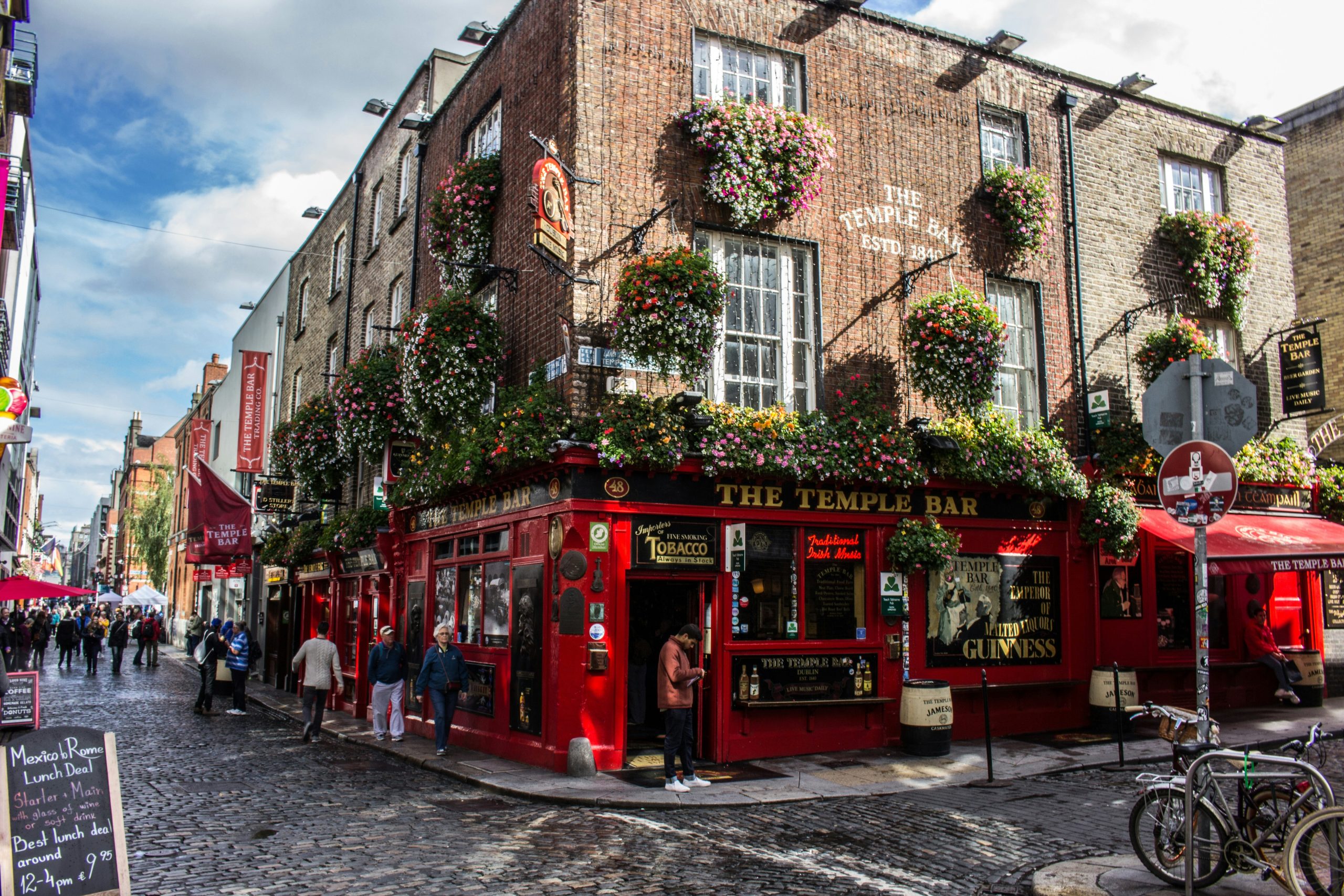
A Love Letter to the Fair City (With a Few Pints and Plates Along the Way)
Ask ten people why they love Dublin and you’ll probably get ten different answers, often shared mid-sentence, sometimes after a pint, and nearly always with a spark in the eye that hints they’re not quite done telling you. Dublin isn’t a city you admire from afar. It’s a city that tugs you by the sleeve, pulls you into a snug, buys you a drink you never ordered, and talks your ear off until closing time. And somehow, you end up thanking it for the privilege.
Let’s start with the obvious: the people. Dubliners are known for their chat, and it’s a reputation they’ve truly earned. The city runs on conversation the way other places run on caffeine. Ask for directions and you’ll get a life story, a warning about the weather, and maybe a tip for a chipper you really have to try. There’s a word for it here—“craic”—and while it’s been exported, watered down, and printed on a thousand airport t-shirts, the real thing is still alive in Dublin. It’s not just fun.
It’s fun shared, loudly, with strangers who turn into friends somewhere between the second round and the last bus.
Then there’s the city itself, which somehow manages to be both small and endlessly explorable. You can walk Dublin. That’s the first thing most visitors notice. The center is compact, the streets are easy to wander, and every corner seems to hide something worth a second look. Georgian doorways in every color you can imagine. A medieval castle tucked behind a modern shopping street. A cathedral that’s been standing since before most countries existed. You don’t need a plan in Dublin. You just need comfortable shoes and a bit of curiosity.
And wander you should, because Dublin rewards those who are curious. Start at Trinity College, where the Book of Kells sits in the Long Room like a relic from another world—because it really is. Then stroll down Grafton Street, where buskers compete with each other and somehow everyone wins. Cross the Ha’penny Bridge, that graceful little cast-iron curve over the Liffey, and suddenly you’re on the north side, where the vibe changes, the accent gets thicker, and the pubs somehow get even better.
Speaking of pubs : no article about Dublin gets far without mentioning them, and no visit to Dublin is complete without at least one proper session. The pub is Dublin’s living room, its theatre, its parliament, and its confessional. You’ll find the famous ones—Temple Bar, of course, though locals will gently guide you elsewhere—and you’ll find the real ones, the ones with no sign, no tourists, and a barman who’s been pulling pints since before you were born. O’Donoghue’s, The Cobblestone, Mulligan’s, The Long Hall. Go for the atmosphere, stay for the music, and leave with three new friends and a half-formed plan to move here.
But Dublin isn’t just about drinking. It’s about eating, too—and this is where the city has quietly become one of Europe’s most exciting food destinations. The food scene here is a lovely contradiction: humble and inventive, traditional and modern, unpretentious and quietly ambitious. So let’s talk food, because a love letter to Dublin without a few food suggestions would be missing the best parts.
Start with breakfast, because Dublin does breakfast right. Forget the hotel buffet. Find a café serving a full Irish—rashers, sausages, black and white pudding, eggs, mushrooms, a grilled tomato, and soda bread with enough butter to make a cardiologist wince. It’s not subtle. It’s not meant to be. Pair it with a strong cup of tea and you’re ready for a day of exploring. If you want something lighter, look for porridge with honey and whiskey cream, or a warm scone with jam and clotted cream in one of the city’s many independent cafés. Dublin takes its mornings seriously, even when it’s raining, which is pretty often.
For lunch, go for the humble but mighty Irish classics. A bowl of seafood chowder by the coast in Howth or Dalkey, thick with salmon, cod, and potatoes, served with brown bread. A toasted special—ham, cheese, onion, and tomato—from a corner deli, eaten on a bench in St. Stephen’s Green. Or, if you’re feeling a bit fancy, a plate of oysters from Galway Bay, slurped with a pint of stout and a squeeze of lemon. Dublin is a coastal city, and its seafood deserves much more credit than it usually gets.
Dinner is when Dublin really shines. The city has a growing number of Michelin-starred restaurants and a farm-to-table movement that takes Irish produce seriously—and with good reason. Irish beef, lamb, and dairy are world-class, and Dublin chefs know it. Book a table at a bistro in Ranelagh or Stoneybatter and order whatever the special is. Trust the waiter. Trust the butter. Especially trust the butter.
And then, of course, there’s the pub grub. A proper beef and Guinness stew, rich and dark and served with mashed potatoes. A plate of fish and chips, battered and fried until golden, with mushy peas and tartar sauce. A bacon and cabbage plate that sounds plain and tastes like home, even if it’s not yours. And for dessert? A warm apple crumble with custard, or a slice of porter cake, or—if you’re in the right place—a Baileys cheesecake that will spoil all other cheesecakes for you.
But food is just half the story. Dublin’s real magic is its culture, and it’s everywhere. Walk through the doors of a theatre and you might catch a new play by an Irish writer you’ve never heard of who’ll be famous in five years. Step into a bookstore—and Dublin has some of the best in the world—and you’ll find shelves devoted to Joyce, Beckett, Wilde, Yeats, and O’Brien, writers who walked these same streets and drank in these same pubs. Literature isn’t a museum piece here. It’s alive, argumentative, and still being written.
Music, too. Dublin is a city that sings. From traditional sessions in back rooms to rock gigs in sticky-floored venues, from buskers on Grafton Street to choirs in Christ Church Cathedral, music is the city’s second language. You don’t have to search for it. You just have to listen.
And then there’s the wit. Dubliners are funny—genuinely, sharply, self-deprecatingly funny. They’ll mock you, mock themselves, mock the weather, and mock the idea of taking anything too seriously. It’s probably a survival strategy. It’s also why a bad day in Dublin still somehow feels like a good one.
Of course, no love letter is honest without mentioning the flaws. Dublin has them. It’s expensive. Housing is a crisis. The rain is constant, the traffic is a nightmare, and the buses will let you down at least once. But somehow, none of it matters as much as you’d expect. Because Dublin doesn’t promise perfection. It promises warmth, and it delivers.
So why do we all love Dublin? Because it’s a city that feels like a person—a witty, generous, slightly chaotic person who tells great stories, sings badly but with heart, and always knows where to get a good pint and an even better plate of food. Because it’s small enough to know, and big enough to surprise you. Because it’s old and tired and vibrant and alive, all at the same time. Because you arrive as a visitor and leave feeling like you’ve been adopted.
And because, at the end of the day—after the walk, the pint, the stew, the music, the chat—you’ll find yourself standing on a bridge over the Liffey, looking at the lights reflecting on the water, and thinking, without any irony at all: I get it. I get why people love this place.
Then you’ll head back inside, order one more, and start planning your return. Sláinte.
SHAWN TILLEY