


In the new list of the most cheap travels in Europe, Sarajevo, the capital of Bosnia and Herzegovina, came out as the cheapest city break in Europe in the Post Office Travel Money 2026 City Costs Barometer: a weekend for two costs around £248, less than a third of Oslo and roughly the price of one round of cocktails in London. In Taste Atlas’s global city food ranking, Sarajevo sits at #46 with a score of 4.48, ahead of other cities in the region. So not only will you eat cheaply, but also eat the food that data have confirmed, which is even more satisfactory than a Michelin star.
Stop 1: Learn the rules before you embarrass yourself
Before you begin to chew, you must know one rule: only the meat-filled pastry is called burek, the cheese-filled is sirnica, the spinach-filled zeljanica, and the potato-filled krompiruša. If you ask for a cheese-filled burek at a bakery, the person behind the counter will give you a look that says the customer is just another tourist, and then will still take the full price. Sarajevo’s food is a wonderful archaeological site of Ottoman, Mediterranean, and Central European cuisines.
Another requisite is that the ćevapi be ordered by the piece. The Sarajevo version usually comes as 5 or 10 pieces, in a soft flatbread (somun) with onion and kajmak (a sort of buttery cream which might be described as the happiest child imaginable of butter and sour cream). Locals eat theirs at about ten in the morning. This is not the late-night snack it’s known as in other parts of the country, but a breakfast dish, and in all conscience they are right.
Stop 2: The two temples of ćevapi (a holy war you can eat)
Sarajevo’s debate over the sacrificial meat is essentially that of ‘Petica’ versus ‘Željo’, and is treated as seriously as any religious argument.
Ćevabdžinica Petica Ferhatović has been running since 1961, and since then the tradition has been kept alive: the fresh beef is ground daily and grilled over beechwood charcoal. If you are feeling adventurous, order a side of kajmak separately, as it is not included, and spread over the somun it changes the whole dish, and even, perhaps, your entire life course. The style is meaty and substantial, with a thicker bread.
The other, Ćevabdžinica Željo, is the other camp: thinner meat fingers, softer bread and faster service, with two shops facing each other across a narrow lane, which the locals still discuss as to which is the “original”. This is Sarajevo’s way of asking which twin is the real one; no one wins, all eat.
Practical advice: visit both, order five pieces at each place and compare. This is called “research.” Usually, a meal at one or the other costs no more than 10-15 KM (about €5-8), so this entire investigation will cost less than a sad airport sandwich.
Stop 3: Bakery codes and a market lunch
Buregdžinica Bosna, on Bravadžiluk street, rolls its own filo dough every morning and bakes coiled pies under a metal lid. This is Sarajevo’s most everyday meal, and also the hardest to re-create, because the domestic oven is a coward. Beyond the meat burek, order a cheese or a spinach pie, sold by weight, with a glass of yoghurt.
Gradska tržnica Markale is your choice for self-help. A portion of traditional burek here costs under £5, and with a local beer it makes a cheap, authentic lunch. You can sit on a bench and eat it all with your hands like a native, that is to say, a person who is in possession of himself.
Stop 4: Sit down for a “proper” Bosnian meal
Those who want table food and not street food should not miss Inat Kuća, located opposite Vijećnica (Sarajevo City Hall). As its name suggests, it is a restaurant with a grudge, since Inat means “House of Spite.” It is said that the original owner, when the City Hall was built, did not want to move, and the house was moved across the river out of stubbornness, and so the restaurant was named ‘Inat Kuća’. Of course, the food is excellent, especially the klepe (mint-and-lamb dumplings with garlic yogurt) and Sarajevski sahan (slow-cooked veal with peppers, tomato and onion, served with japrak grape-leaf rolls).
To experience a more expensive, higher-end fusion of Bosnian and European cuisine, go to The Four Rooms of Mrs. Safija, hidden in a historic building and named after a forbidden love story. Its menu combines traditional Bosnian ingredients with European technique. Prices are high by Sarajevo standards, normal by Parisian standards. It’s not a place to just walk in without planning. Reservations essential.
Stop 5: Coffee is not a drink, it’s a ritual (and a personality test)
Bosanska kahva is not “a cup of coffee.” It is brewed in a small copper pot (džezva), served with the pot, a cup, a lump of sugar, and a piece of rahat lokum. The way to drink it is to bite the lump of sugar and then sip the coffee. Dropping the sugar into the pot is the Turkish way, not the Bosnian one, and doing it wrong in front of a local is the fastest way to be politely judged for the rest of your trip.
Go to Ministry of Ćejf on Kovači street. Ćejf roughly means “the pleasure of taking your time,” and this coffee place builds that attitude into its coffee. It serves both traditional Bosnian coffee and specialty pour-over, and it is one of the few places in Sarajevo where these two ways of drinking coffee coexist side by side without provoking the other. In the old town, Teahouse Džirlo is another option: 53 kinds of tea, Bosnian coffee, and fresh juices, with owner Dzirlo himself as part of the experience. He is constantly chatting with you. There is no escape. You will enjoy it.
Stop 6: A sweet finish (and a sugar coma)
Slastičarna Ramis, on Sarači street, has been making baklava, hurmašice, and kadaif for decades, but its signature is tufahija, a walnut-stuffed apple poached in syrup and topped with fresh cream, eaten with Bosnian coffee. This is an Ottoman-era dessert, so sweet that you need the coffee alongside it, and so sweet it makes you forget your name for a moment.
For a lighter fare, Baklava Dućan in the old town Baščaršija is a tiny red-fronted shop with only a few things on sale: baklava, lokum and ružica (rose-shaped slices). Eat standing at the door and move on. That’s a valid way to eat here, and after everything above, it’s probably wiser to stand.
A sunset bonus (the best cheap date in Europe)
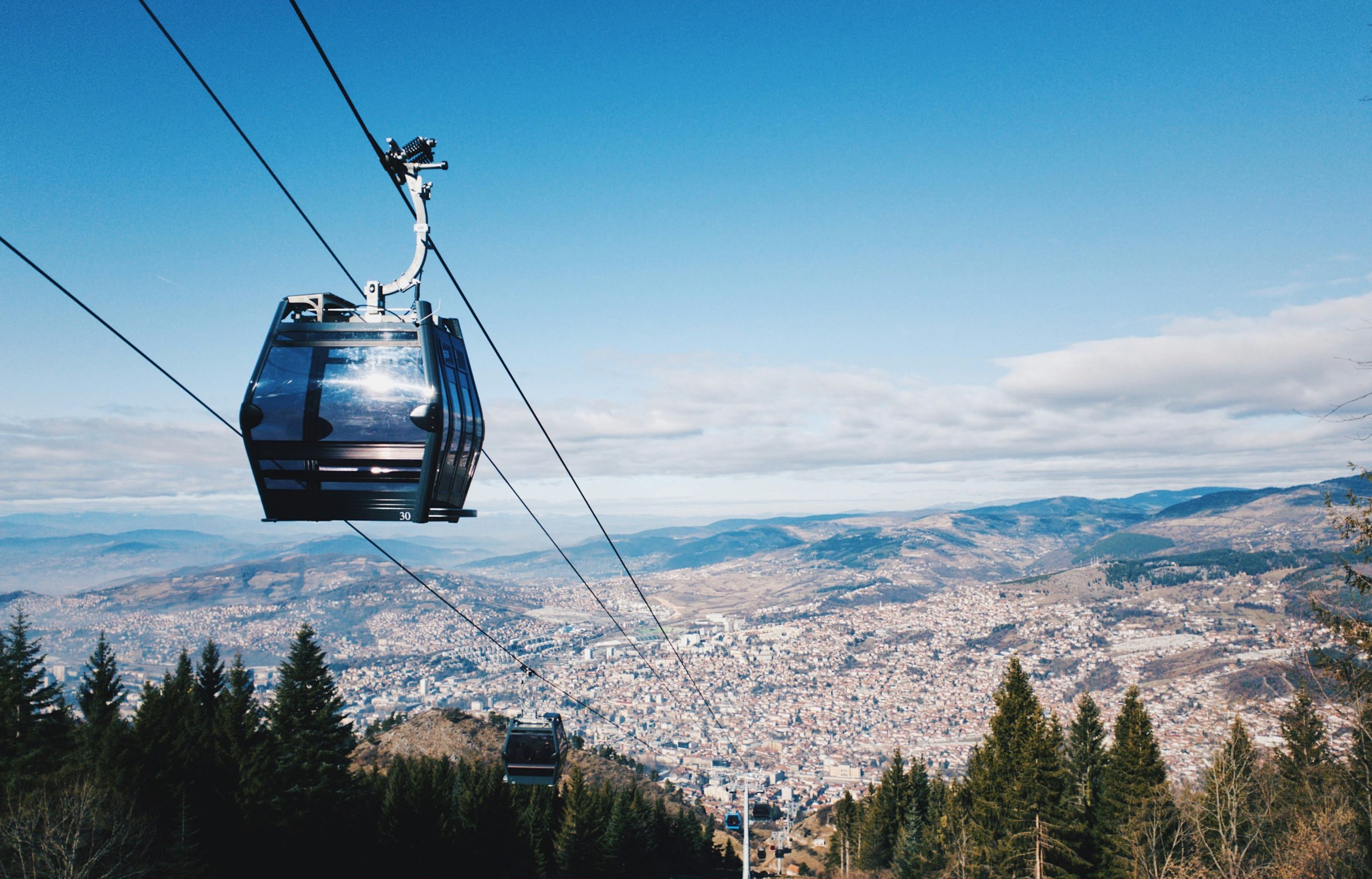
Buy a slice of freshly baked pizza from Pekara Kovači kod Mahira (simple, cheesy, hot) and take a walk up to the Yellow Fortress (Žuta Tabija). Sit on the wall, with the whole city spread out below you, as Sarajevo turns gold in the setting sun. It’s not a Michelin-starred meal, but it may well be the bite you remember longest, and objectively it’s the best-value dinner with a view in Europe. Oslo is wailing somewhere.
Budget reference (for people who like numbers and not surprises)
According to 2026 data, a filling local meal in Sarajevo (ćevapi or burek level) costs 10-20 KM (€5-10). A sit-down dinner at a proper restaurant starts around £15 per person and goes up from there. Coffee and dessert are almost negligible. For a foodie, Sarajevo’s core appeal is this: you can eat a complete culinary tradition stretching back to the Ottoman era for the price of a cocktail in Western Europe, and unlike that cocktail, you’ll still be full three hours later.
BY J. ABREU