



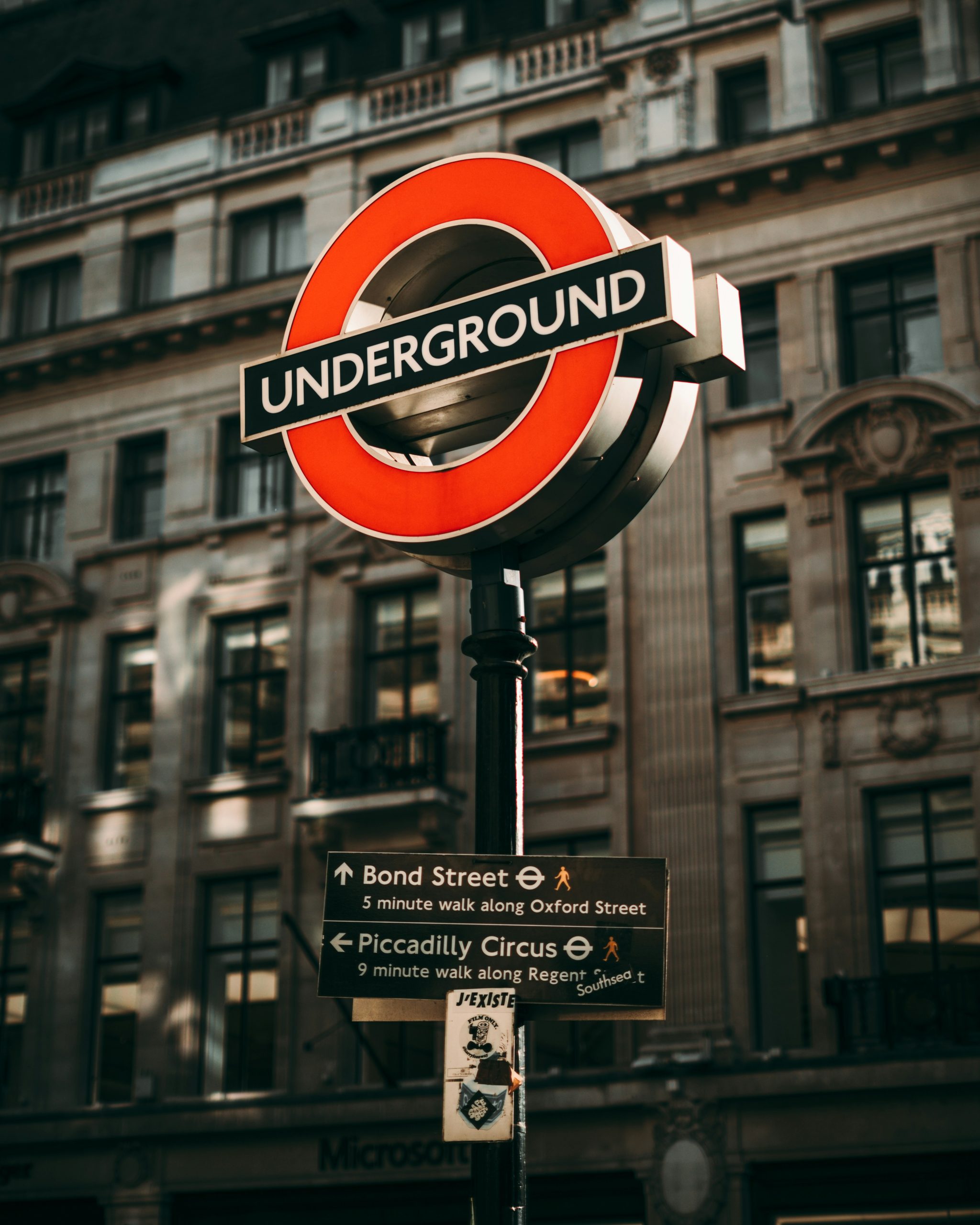
This week, Oxford Street’s paradoxes came to an end. As of 26 October 2026, almost a kilometre of the street has been permanently pedestrianised. The renowned high street of the country, a street known the world over, but for many, it has been a place to survive rather than to enjoy, crammed with traffic, cabs and frenzied shoppers, where even to cross the street has been an operation in strategy. The lights for the Christmas decorations are about to go on and the wizarding world takeover of the street is imminent. It is no longer a mere thoroughfare, but a destination.
The Transformation, Concrete and Real
The traffic-free zone is between Orchard Street, near Selfridges, and Great Portland Street, to the east of Oxford Circus. It is closed to buses, cabs, private hire vehicles, bicycles, electric scooters, pedicabs, and the rest. Emergency vehicles are allowed in, and deliveries may still take place between midnight and seven in the morning. Cross traffic can still pass north-south at designated junctions such as Regent Street, Duke Street and Stratford Place. But people can now walk in the middle of Oxford Street, really in the centre, without looking over their shoulder.
- This is not a summer experiment. It is the first stage of a work of redevelopment of £150 million, which will ultimately bring trees, benches, seats, with the completion of the work in spring 2027. At the moment, the place is a construction site, and a discovery, but the most important thing has happened, and the space is reclaimed by people.
Why This Matters More at Christmas Than Any Other Time
Oxford Street is always a spectacle, but it has always been a trial. The street is frequented by half a million people every day; at the week-ends, in the Christmas season, the crowd is such that the pavements look like a queue, and, when you add the buses and taxis, you have a place where the magic of the lights is in constant conflict with the stress of navigating.
That calculation is now completely changed. Parents with children don’t have to walk with a white-knuckled grip on each other’s arms, friends walk four abreast without straying into a bus lane, and foreign visitors, experiencing their first British Christmas, can actually pause and look up at the lights without being swept along by the rushing crowds. The street has gained an inestimable asset: the right to linger.
But it is just a question of time. London needs lingerers, the city needs them to stay longer. The Mayor’s office has been open about its hopes, and estimates an increase of £82 million a year in gross value added and support for over 700 jobs. Oxford Street has not lost its commercial power; it has acquired conditions in which that power can be exploited.
A Harry Potter Christmas Unlike Any Other
If pedestrianisation were the only attraction of this Christmas, it would still be worth something, but it isn’t. A second, extraordinary layer has been added to the Oxford Street Christmas season: Harry Potter takes over. The famous star lights, with over 5,000 white stars and more than 300,000 LED lights, will be joined by specially created illuminated designs. It all coincides with two significant events: the opening, on November 4, of the world’s largest Harry Potter shop on Oxford Street, and the Christmas Day premiere of HBO’s new series of Harry Potter and the Philosopher’s Stone.
It was a potent combination, for Harry Potter is not merely a brand, but a whole movement, with followers of all ages, and it is a worldwide cultural phenomenon. The prospect of walking along a wizard’s wonderland on Oxford Street on Christmas Day was enticing enough to tempt visitors to choose London rather than Paris, New York, or Berlin. The street was the event.
The New West End Company’s chief executive, Dee Corsi, called the collaboration an historic moment that would create an unforgettable Christmas experience and showcase the West End at its very best. That’s not just the usual slogan, it’s the reality of world-class engineering meeting world-renowned content: the roadways create the stage; Harry Potter creates the allure. Together, they make the whole greater than the sum of its parts.
The Skeptics Have a Point-But the Bet Is Worth Making
It would be dishonest to pretend that all the world is celebrating; Westminster City Council has voiced its concern at the possible effect of displaced traffic on the surrounding streets, such as Wigmore Street and Henrietta Place, and of noise and pollution shifting, rather than being eliminated. These are genuine concerns, and Transport for London has admitted that there will be an increase in traffic on some local roads; but this first phase of the scheme is temporary, so that the resultant data can be used to draw up a permanent design.
But here’s the important context: Oxford Street was in decline, it was no longer as vibrant as it once was, with the rise of e-commerce, the closing of big department stores and the bleak post-pandemic period, a decline that no amount of route optimisation by the bus companies could have put right. It was all going downhill, and the new pedestrianisation is a gamble, albeit a substantial one: that the future of retail is the experience, that people travel for places and that the world’s most famous shopping street deserves to be a place you want to visit, not somewhere you just have to cross to get from one end to the other.
The bet is of a more immediate nature, however, to travellers who are contemplating a trip to London during the Christmas season, since the city can now offer something of enchantment that no other city can quite equal: the combination of a genuinely traffic-free shopping street, a fantastical, Harry Potter-themed Christmas light display, the opening of the wizarding flagship store, and not to forget the nearby Winter Wonderland in Hyde Park, which alone attracts millions of visitors each season. It all goes to make a route that has an attraction in itself and is special. Oxford Street is no longer just a stop on the way to somewhere else; Oxford Street has become the reason for the journey.
The Practical Traveller’s Guide
For those who are planning a visit at Christmas, the logistics are simple. The area of the temporary ban on traffic is served by alternative bus stops about 200 metres away on Wigmore Street, Henrietta Place and Cavendish Place; taxi ranks are situated about a hundred metres from the closed area; and those coming by the Tube may find the Bond Street, Oxford Circus or Marble Arch stations all within easy walking distance. Cyclists must dismount or go roundabout as bicycles are not permitted in the area.
The opening of the Harry Potter Store is on November 4, and the HBO series premieres on Christmas Day. The lights on the street are expected to switch on in early November, but no one has revealed the date yet. For the best experience, consider visiting in the first half of December, when the lights are fully illuminated but the peak holiday crowds have not yet arrived. The magic is complete in the early evening, when the stars, the lights and the windows of the shops are in a frame, as they say on the cards, and one can stand in the middle of it, take one’s time and enjoy it.
A New Chapter for an Old Street
Oxford Street has been, over the years, successively a Roman road, a Georgian shopping promenade, the main street of department stores in the reign of Queen Victoria, and a 20th-century shopping thoroughfare, and every phase of it has been adapted to the requirements and technology of the day. The present pedestrianisation is a beginning of a further rebirth, which recognises that the great shopping streets of the world are great not because of their shops, but because of the experience they afford to their visitors.
For the first time in living memory Oxford Street will make people feel something different. It will be like a destination, not a passage, a meeting place. That is a gift to a city that has been trying for years to find out what to do with its most famous street.
LINA BALIOTIS
SEE MORE
- BBC News — Live coverage of Oxford Street pedestrianisation, including traffic restrictions, bus diversions, and TfL monitoring statements
https://www.bbc.com/news/live/cqkglj32ygr8t - London City Hall (Official Mayoral Press Release) — Official announcement of the pedestrianisation plan, including the scope, exemptions, and economic development goals
https://www.london.gov.uk/mayor-confirms-next-steps-make-world-famous-oxford-street-traffic-free-end-summer - Wizarding World (Official Harry Potter Website) — Official announcement of the Harry Potter flagship store opening on Oxford Street on 4 November 2026, including store details
https://www.harrypotter.com/news/harry-potter-shop-oxford-street-opening-date-reveal
Time Out (https://www.timeout.com/london/news/oxford-street-christmas-lights-2026-harry-potter-100726)
Londonist (https://londonist.com/london/christmas-in-london/oxford-street-christmas-lights) .