



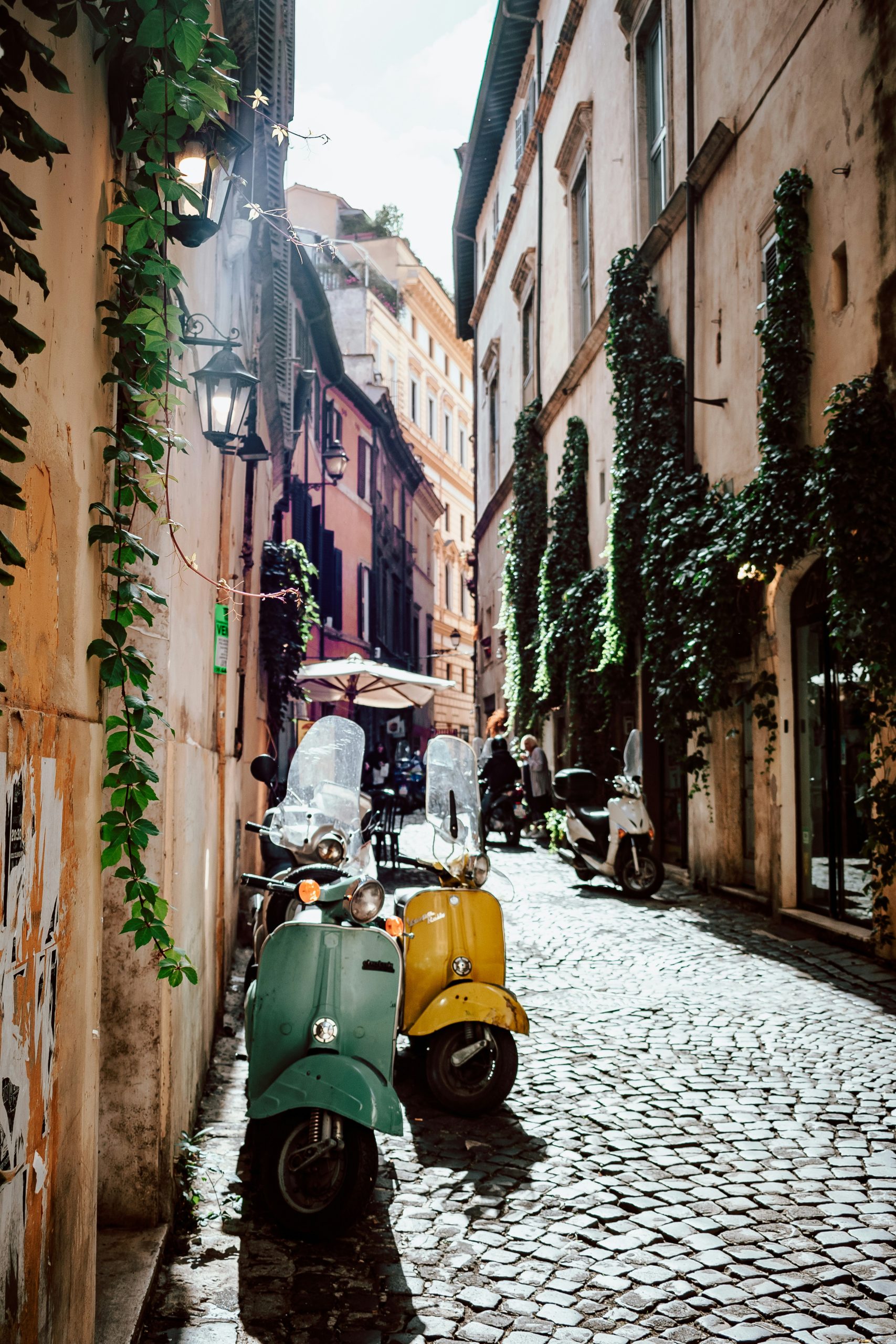
Rome is a city where eating well is no luxury, it is merely the right of birth. But the density of its restaurants, the wealth of its trattorias, its osterias and its fine-dining temples, can paralyse even the best-prepared traveller. The difference between an average tourist meal and a transcendent plate of carbonara often consists of a single street, a reservation, or a recommendation from someone who actually lives there and who knows that, in Rome, Si mangia bene is not a slogan, but a way of life.
This guide cuts through the noise. Here are ten restaurants that represent the full range of Rome’s current restaurant scene: from century-old establishments that make pasta by hand, to Michelin-starred kitchens that interpret the city’s pastoral, gastronomic DNA. Each entry explains why it is worth your time, why it stands out in a notoriously competitive city, and what you should expect to pay (per person, excluding wine, unless otherwise stated).
1. Roscioli Salumeria con Cucina
What it is: A deli counter-turned-restaurant near Campo de’ Fiori that has become the unofficial embassy of Roman gastronomy for well-informed travellers and locals alike.
Roscioli does not follow the fashions; it creates them. The salumeria in the front is stacked with aged pecorino, culatello, olive oil, while the back and the tables outside serve the city’s most consistent carbonara, matriciana, and cacio e pepe; the wine list is encyclopedic, and the burrata is imported from Puglia. It is crowded, a little small, and expensive for a trattoria, but ne vale la pena: as Romans say, Chi sta bene, non si muove.
How much: 45 to 65 € per person for a full meal with antipasto, pasta and dessert. The carbonara alone is between 16 and 18 €, and a ‘taglio’ with salami and cheese is about 20 €.
2. Armando al Pantheon
WHAT IS IT: A family-run trattoria, established in the same spot near the Pantheon in 1961, and now in its second generation, led by chef Claudio Gargioli.
In a neighborhood where mediocre restaurants rely on traffic from the Pantheon, Armando is the exception. The menu is a love letter to the Roman classics: the “cacio e pepe” tossed at the table, the pajata (veal intestines in tomato sauce) for the adventurous, and the “zabaione” still warm. The dining room is tiny, only thirty seats, so reservations are essential: prenotare è d’obbligo, reservations are required. This is the Rome that one remembers, white tablecloths, slow and friendly service, kitchen that does not cut corners.
Cost: €40-55 per person. Pastas hover around €14-16, main courses such as veal saltimbocca or roast lamb, €20-26.
3. La Pergola (Rome Cavalieri, Waldorf Astoria)
The place: Rome’s only three-star Michelin restaurant, located on Monte Mario, with a magnificent terrace overlooking the whole city. For twenty years now, Heinz Beck has held the three stars.
La Pergola is not a place to eat Roman food. It is a restaurant for Beck’s cuisine: Mediterranean, technique-oriented and absurdly refined. Tortellini filled with a liquid carbonara, a pigeon cooked in wine, the service is balletic, the wine cellar has over fifty thousand bottles, the sunset view is worth the trip. Beck was recently awarded the Michelin Guide’s “mentor” prize, and thus consolidated his position as godfather of the Roman gastronomic scene. In every sense, this is an experience. Costa un occhio della testa, it costs an arm and a leg (literally “an eye from the head”), but some meals are worth the sacrifice.
How much: Between 250 and 350 euros per person for the tasting menu (only food), a la carte is also available, but pushes up the price a bit; wine pairing adds 120 to 200, this is an Xmas dinner.
4. Da Enzo al 29
What it is: A no-frills trattoria in the heart of Trastevere, with a cult following, an interminable queue, and a menu that scarcely changes.
Why go there: Da Enzo is the platonic ideal of the Roman neighborhood restaurant: tablecloths, hand-written menu, and a kitchen where frying artichokes is a sacred duty; the carbonara is classic: smooth, peppery, a heap of guanciale; and the tiramisu is made in a ceramic dish the size of a shoebox. There is always a line, so arrive before opening or prepare for a queue of thirty to forty minutes. Chi va piano va sano e va lontano: [“Go slow and you will go far and far, and you’ll eat well”).
How much: thirty to forty francs per person. The pasta dishes are twelve to fourteen franсs, the fried artichoke six françs. Cash is preferred, but credit cards are also accepted.
5. Retrobottega
What it is: A modern, minimal restaurant near Piazza Navona run by two chefs with Michelin stars and offering a constantly changing menu based on the best local produce and foraged foods.
Why go there? Because it’s where the younger, coolest, and most adventurous Roman food crowd goes when they don’t feel like carbonara; the open kitchen turns out dishes like smoked eel with beets and horseradish, or homemade pasta with nettles and ricotta—the cooking is precise, inventive, and unafraid of vegetables, the wine list is long and natural-leaning, and the space feels more Berlin or Copenhagen than Rome. It is not traditional, and it doesn’t try to be; it is “un’altra cosa,” something completely different. For travelers who have had their fill of “gricia” and need “un cambio di passo,” a change of pace, this is the palate cleanser.
Cost: €50-€70 per person. The tasting menu costs about €65; pasta dishes are around €16-€20 à la carte.
6. Matricianella
A family-owned establishment near the Spanish Steps, specializing in Roman classics since the fifties, with a cellar of over 1,000 wines run by three sommeliers.
The reason why: Matricianella is frequently quoted in discussions of the best cacio e pepe in town, and for good reason: the pasta is coated with a sauce that, despite the impossibility, finds the right balance between sharp pecorino and starchy pasta water without it sticking to the plate. Also a fiori di zucca, fried zucchini flowers, and a salta in bocca, which literally “jump in your mouth”…. This is the food that licks your lips, this is the raffa da l’occhio, food that makes you lick your mustache.
“How much: 40-55 zlotys per person. Pastas: 13-16, main courses: 20-28 z. The wine list starts with an inexpensive wine and climbs steeply.
7. Pizzarium Bonci
- What is it? A tiny pizzeria near the Vatican, run by Gabriele Bonci, a baker who, it has been said, started Rome’s artisanal-pizza-al-taglio revolution.
Why you should go: The dough is a living thing, well soaked, fermented for up to 48 hours, and topped with combinations that may seem unlikely until you eat them (potato and rosemary, mortadella and pistachios, pumpkin and gorgonzola). You order by weight, you point behind the glass what looks good, you wolf down the street, it’s not a restaurant, but it’ll be one of the best meals in Rome under fifteen francs. The suppl are also excellent: da urlo.
*** The cost: €10 – €15 per person, for a good slice or two, plus a drink. Sold by weight, about €30-35 per kilogram.
8. La Rosetta
The restaurant is located in Via della Rosetta, near the Pantheon, a short distance from the church of San Silvestro in Bosco. It was at the beginning of the sixties that chef Massimo Riccioli was scolded for opening a restaurant dedicated to fish in Rome, renowned as the capital of peasant cuisine. He was right, everyone else was wrong.
The fish is delivered fresh every day from the Lazio coast and beyond: oysters from Normandy, shrimp from Sicily, sea bass baked in salt. The crudo menu is a master class in economy, the pasta with clams and bottarga, a dish that stays in the memory for years. It is expensive, yes, but ‘chi piu spende, meno spende’: the more you spend, the less you spend – and the quality justifies the price. Book the small terrace for a warm evening: ne vale davvero la pena, it is truly worth it.
What it costs: €70-100 per person. Crudo starts around €20, whole fish is priced by weight and can easily reach €40-€50 per person, oysters and champagne, however, is a very dangerous combination financially.
9. Gino al Parlamento (Trattoria Dal Cavalier Gino)
A tiny, old-fashioned trattoria on a side street by the Italian Parliament, known to locals simply as Gino’s. It has been in the same family for generations.
Why: Gino is the antidote to tourist Rome. The menu is short and uncompromising: tonnaroni alla cioppa, abbacchio (baked lamb), pollo al forno with potatoes, and a house red that costs less than a coffee in some cities. The walls are full of photographs of politicians and artists who have eaten here over the years. The service is rude as only Roman places can be – burbero ma buono, rude but with a heart: no Instagram background, no “nonna” in the window – just honest food at honest prices. “Alla bene e alla vecchia maniera,” as they say. * Good old-fashioned way.
What does it cost? €25-35 per person. Pasta €10-12, second course €15-20. This is one of the best-priced meals in the historic center—qualità prezzo imbattibile, unbeatable quality for the price.
10. Ineo (Anantara Palazzo Naiadi)
What it is: One of Rome’s most recently starred restaurants, awarded in late 2025, located inside the Anantara Palazzo Naiadi hotel, close to Piazza della Repubblica. Chef Hers De Agostinis heads the kitchen.
Why Go: Ineo earned its star by doing something unusual: mixing Italian technique with spice routes. De Agostinis, who has cooked in Europe and Asia, serves dishes like cured amberjack with yuzu and pink pepper, or risotto with garam masala and aged Parmesan cheese; the dining room is elegant and modern, quite in contrast to the hotel’s neoclassical exterior. Michelin inspectors were especially astonished by the “outstanding gourmet experience” and the kitchen’s “fantastic talent for surprising diners without alienating them.” For anyone who wants to see where the future of Rome’s fine-dining scene is heading, this is the place to reserve. Chi vivrà vedrà: he who lives will see. But reserve now, because posti limitati: seats are limited.
How much: €120 to €180 per person for a tasting menu. The menu a la carte is available, wine pairings start at €70.
A Final Note on Navigating Rome’s Dining Scene
Rome rewards the curious and punishes the passive. The restaurants in this guide share one common quality, they are owned by people who care deeply about what they send out of the kitchen. Rome, however, is full of what the Washington Post* recently called ‘pasta-rolling theatres’: shops with windows showing women rolling out dough in a display window, while the actual cooking goes on elsewhere. They don’t necessarily serve bad food, but they are a performance. These ten restaurants are not a show. They are the real thing or as close as one can get. Here one eats for real. Qui si mangia sul serio.
To eat out in Rome, one has to set oneself the following standards: A casual lunch at a typical Italian restaurant costs from fifteen to twenty-five pounds; an average dinner from thirty to fifty; a Michelin dinner from eighty to three hundred. For anything on this list, you will need to make a reservation well in advance, as the best tables in Rome are usually booked weeks in advance. Go hungry, go early, and tip modestly (two pounds a head is the going rate, not the rule).
BY RICARDO RICCI
SOURCES FOR MORE
1. Michelin Guide: Affordable Restaurants in Rome
https://guide.michelin.com/ie/en/best-of/affordable-restaurants-rome
Rome’s Bib Gourmand affordable restaurant recommendations, supporting the value positioning of restaurants such as Gino al Parlamento.
2. Il Messaggero: Michelin Guide 2027 Lazio Region Report
https://www.ilmessaggero.it/italia/guida_michelin_2027_ristoranti_lazio_roma_quali_sono-9887585.html
La Pergola retains three Michelin stars and that INEO holds one Michelin star
3. Armando al Pantheon Official Website: History Page
http://www.armandoalpantheon.it/en/armando/
first-hand information on the restaurant’s founding in 1961, the Gargioli family’s heritage, and Claudio’s current role in the kitchen
4. Matricianella Official Website
https://www.matricianella.it/en.aspx
the restaurant’s founding in 1957, its operation by the Lo Bianco siblings since 1995, and its adherence to traditional Roman cuisine
Note: Official website links for Roscioli, Da Enzo al 29, Retrobottega, Pizzarium Bonci, La Rosetta, and Gino al Parlamento visit daenzoal29.com, bonci.it, and larosetta.com