



The Smile of the Suitcase: On Motion, Meaning, and the Modern Art of Travel
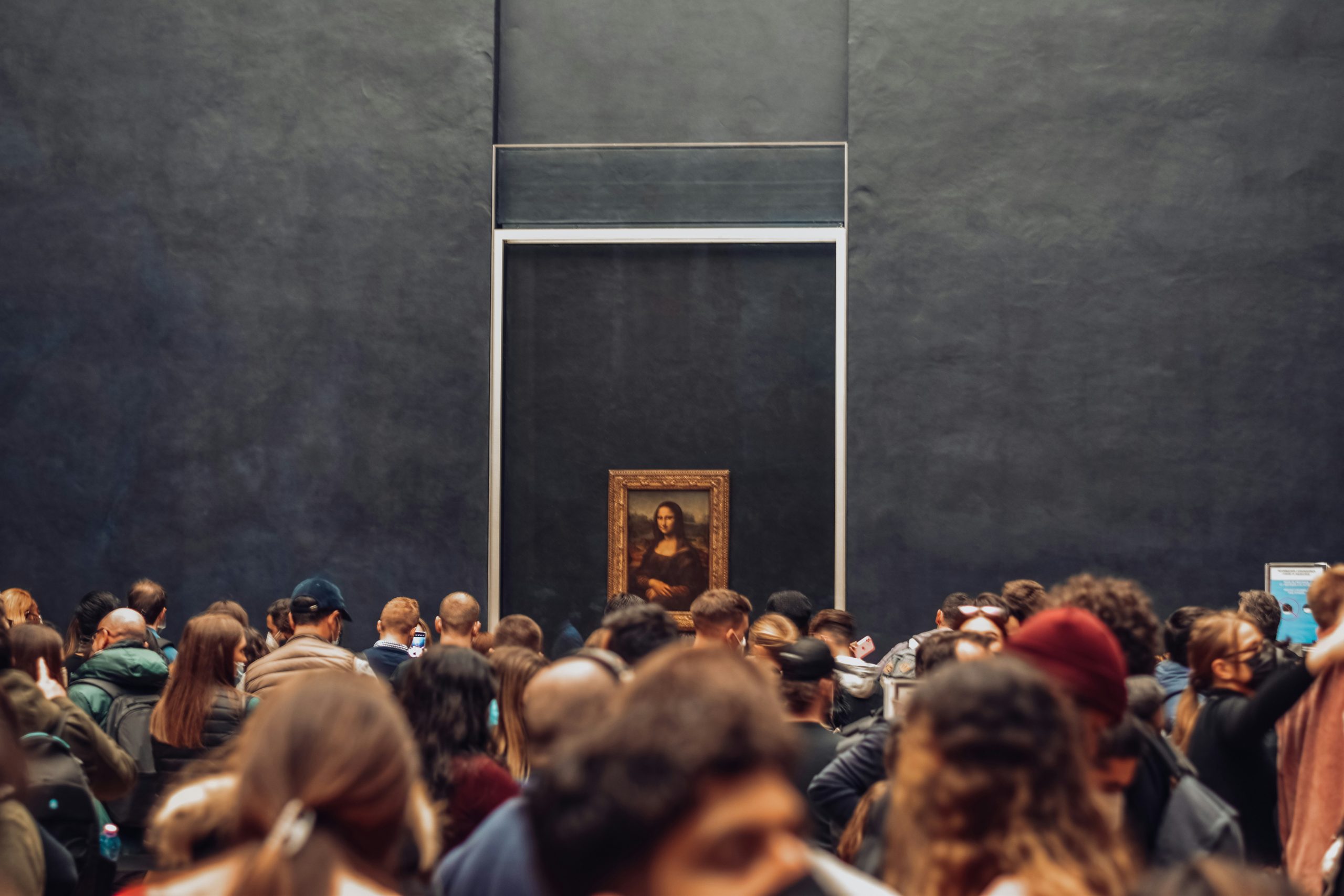
We begin, as we must, with a question that has haunted humanity for five centuries: Is the Mona Lisa smiling?
Stand before her in the Louvre, and you will find the answer is not in her lips, but in your own feet. After the three-hour queue, the shuffling crowd of selfie sticks, and the faint smell of anxiety that fills the Salle des États, you look at her. She is small. She is behind bulletproof glass. She is, honestly, unimpressed by you. And in that moment, you realize she is not smiling, nor is she not smiling. She is simply indifferent to your presence. She has seen it all before.
This is the great paradox of modern travel. We chase the iconic to feel alive, only to find that the icon is exhausted by our chase. And yet, we persist. We pack our nylon bags, charge our noise-canceling headphones, and download our offline maps because despite the crowds, the carbon guilt, and the overpriced airport lattes, to move is still the most sophisticated form of prayer we have.
This is not your grandfather’s Grand Tour. This is the age of the “experiential” vacation, where the souvenir is not a snow globe, but a story you can tell at a dinner party. It is a high-wire act of curation, a delicate dance between the “must-see” and the “must-avoid.” To travel well in 2026 is to be a philosopher, a detective, and a bit of a hedonist, all while wrestling with a carry-on that is .5 kilograms over the weight limit.
Let us dissect this glorious, chaotic, modern odyssey.
Phase One: The Digital Alchemy of Arrival
There is a specific magic to the moment the airplane wheels touch the tarmac. It is the sound of Schrödinger’s cat finally being observed; you are at once in your old life and your new one. But in modernity, the first breath of foreign air is not the scent of jasmine or diesel. It is the buzz of your phone connecting to a local network.
“Welcome to Portugal,” it chirps. “Your data plan is now active.”
The sophistication of modern travel begins here, in the seamless destruction of disorientation. Within sixty seconds, you are not lost; you are “geolocated.” You know that the blue dot on the screen is you, and the little red pin is the hotel that promised a “boutique experience” and a “rainfall showerhead.”
My first experience of this new-world order was in the alleys of Marrakech. My paper map had been made useless by the labyrinthine souks, a crumpled relic of a pre-digital age. But my phone? It guided me through the chaos with the calm authority of a chess grandmaster. I weaved past spice mounds and leather tanneries, my eyes flicking between the beautiful, chaotic reality and the serene, ordered grid on my screen.
And yet, the real victory of that journey was not finding the hotel. It was putting the phone away. The moment I pocketed the oracle and listened—really listened—to the call to prayer echoing off the terracotta walls, I had arrived. The app gets you there; the silence keeps you there. That is the first lesson: use the tech, but do not let it become the experience.
It is the waiter, not the wine.
Phase Two: The Gastro-Quest and the Authenticity Trap
The second pillar of the modern pilgrimage is the pursuit of the “authentic meal.” We no longer eat; we “dine with locals.” We have moved past the hotel buffet. We are hunting for the hole-in-the-wall, the grandmother stirring a pot in the back of a nondescript building, the place that has no Instagram page but has been serving the same stew for eighty years.
This is a noble quest, but it is also a minefield of pretension. In Bologna, I found myself in a narrow alley, following a TikTok that promised “the best tortellini in the universe.” The queue was international, a United Nations of hungry influencers.
The pasta was excellent, objectively perfect. But the experience felt less like a discovery and more like a check-in.
The real triumph came in a moment of failure. The famous balsamic vinegar tasting I had booked was over-subscribed. Dejected, I wandered into a small enoteca where the proprietor, a man with eyebrows like caterpillars, spoke no English. Through a series of gestures that bordered on interpretive dance, I communicated that I was hungry and lost.
He nodded, disappeared into the back, and returned with a plate of mortadella, a hunk of Parmesan, and a glass of Lambrusco that was so frizzante it nearly took my head off. It was not a curated experience. It was an accident. There was no story I could pre-write for Instagram. But as I sat on a plastic crate, eating cured meat with my fingers and watching the Italian evening unfold, I realized this was the Holy Grail. The “authentic” cannot be scheduled. It arrives when you stop looking for it.
Phase Three: The Grandiose and the Intimate
Modern travel is defined by a duality: the need to see the Grand Canyon, and the need to find a quiet corner of it away from the tour buses. We want the Eiffel Tower glittering at night, but we also want to know the name of the baker who makes the best croissant on Rue Cler.
This is the sophistication of scale.
It is about knowing when to be a tourist and when to be a wanderer.
Take the Acropolis in Athens. It is an archaeological marvel, a testament to human ambition. But to stand there at noon in July is to experience a form of controlled torture, a human sardine can with better columns. The modern, savvy traveler knows this. They go at dawn. They arrive as the gates open, when the light is golden and the marble is still cool. They experience the majestic scale while it is still intimate.
I applied this logic to the Vatican Museums. Instead of the marathon queue that snakes around the walls, I booked a “breakfast with the Pope” tour, a ludicrously expensive add-on that allowed me to enter the Sistine Chapel before the crowds descended. For fifteen minutes, I was alone with Michelangelo.
I laid on the floor, ignoring the guards’ whispers, and looked up. It was just me and the infinite. No flash photography, no elbows in my ribs, just the terrifying, beautiful silence of one man’s conversation with God. In that moment, the money was irrelevant. I had bought time, which is the only currency that matters when standing before a ceiling that changed the world.
That is the lesson of the Grandiose: do not simply see it.
Conquer it. Outmaneuver the masses.
Then, afterward, reward yourself not with a souvenir, but with a moment. Find a piazza, order a spritz, and watch the light fade. The triumph of the modern traveler is not the checklist; it is the gap between the checklist items.
Phase Four: The Flight and the Friction
Let us address the elephant in the cabin: the flight itself. We have romanticized the journey for centuries, from the Orient Express to the Pan Am Clipper. But modern flying is a soulless utilitarian box. It is a cattle car with wings.
However, sophistication is not the absence of friction; it is the graceful handling of it. I have learned to treat the airport not as a waiting room, but as a theater. The delayed flight is not an inconvenience; it is an opportunity to observe humanity. The man arguing with the gate agent, the teenager crying over a lost AirPod, the businesswoman who has turned the business lounge into her temporary office—they are all characters in a play about the tension between where we are and where we want to be.
My most memorable flight experience was not in First Class. It was in the back of a Ryanair plane, wedged between a German backpacker and a French nun. The backpacker was telling the nun about his plans to hike the Camino de Santiago. The nun, in turn, was telling him about the spiritual silence he would find. They spoke in broken English, swapping snacks and stories. I sat between them, feeling like a witness to a beautiful, accidental communion.
The jetlag is a physical price, the cramped seats are a physical price, and the plastic food is an insult to the palate. But the friction is part of the story. The discomfort makes the arrival sweeter. To complain about a three-hour delay when you are about to land in Tokyo is to miss the point. You are not a package; you are a person, and travel is not a service, it is a challenge.
The Verdict: The Smile Within
So, does the Mona Lisa smile?
In the end, it does not matter. We travel to see her, but we travel also to see ourselves reflected in the glass. We travel to be proven wrong, to have our assumptions shattered, to taste something that burns our tongue and makes us feel alive.
The modern world has made travel accessible, affordable, and—if we are not careful—banal. It has turned the world into a curated listicle. But it has also given us the tools to escape the listicle. We can find the alley in Bologna, the dawn in Athens, and the quiet in Marrakech, not in spite of the technology, but because of it.
We are the generation of the “digital detox,” a term that implies we are addicted to the very thing we need to survive. The sophistication, then, is in the dosage. Use the app to get lost, then turn it off to find yourself. Book the ticket to the iconic, then wander off the path to find the unexpected.
The smile is not on the canvas. It is on the face of the traveler who, after a long day of navigating the glorious, frustrating, overwhelming world, sits down at a sidewalk café with a full heart and tired feet. They look at their photos, but they don’t post them. They just smile. They know that the greatest souvenir is not the one you buy, but the one you carry in the quiet spaces of your mind.
To travel in the modern age is to be a collector of not things, but of small, unshareable moments. It is to understand that the best journey is the one where you return home, not to your old life, but to a slightly altered version of yourself. The Mona Lisa may be indifferent, but the traveler who has seen the sunrise over Angkor Wat, tasted the salt of the Dead Sea, and felt the chill of the Northern Lights knows a secret: the world is smiling, and it is smiling for you.
Now, pack your bag. The flight is boarding. And remember, the real adventure begins when the map ends.
FRANCOIS TISSOT