



By the time you finish reading this sentence, someone in Milan has probably just ordered an espresso. At 10pm. And nobody said a word about it.
Let me set the scene. It’s May 2026. Milan hums with energy as co-host of the Milano Cortina Winter Olympics – though honestly, the only gold most of us are chasing is for “most risotto eaten in a week.” The city is turning into a playground for the elite, mixing Olympic prestige with that timeless “Made in Italy” charm.
You’ve booked five days. You want culture. You want fashion. You want food so good it makes you rethink every meal you’ve ever had.
And most importantly: you want to do it like someone who knows not to order a cappuccino after 11am. (Seriously. Don’t. The Italians will judge you. Quietly. Mercilessly.)
Welcome to Milan, where the Duomo took over 600 years to complete, the shopping is outrageous, and the Michelin-starred restaurants are so good they might make you tear up. Probably right into your ossobuco.
Grab your stretchiest trousers. This is going to be delicious.
Rule One: Milan is best explored in 4-5 days. Any less and you’ll rush through it. Any more and your wallet might start complaining.
Rule Two: Dress like you mean it. Milanese locals take “La Bella Figura” seriously. You don’t need to wear Armani from head to toe, but leave the tracksuit behind. You’re not at the airport now.
Rule Three: Book everything early. The Michelin-starred restaurants in Milan need reservations, sometimes weeks ahead. The Duomo rooftop. The Last Supper. Your dignity. Plan for it.
Rule Four: May and September are ideal. You’ll catch the city’s gardens in bloom and perfect “aperitivo” weather, while avoiding the Olympic price surge in February.
Got it? Great. Let’s go.
Start where Milan begins. The Duomo di Milano.
This cathedral is one of Europe’s most breathtaking landmarks. Construction began in 1386. It took nearly six centuries to finish. 135 spires. 3,400 statues. White and pink marble that seems to glow from within.
But here’s the thing that changes everything: don’t just stand outside and take a photo. Go inside. Then head up to the rooftop. Walking among the marble spires, close enough to see every carved detail, with the city below and the Alps in the distance – that’s when Milan really gets to you.
Book your tickets online ahead of time. Get the “fast track” option. Go early to avoid crowds. You’ll thank me later.
Pro tip: There’s a Burger King upstairs in the square with a surprisingly great view of the Duomo. It feels very Milan – centuries of Gothic architecture, and someone eating a Whopper in front of it. Don’t eat there. Just take the photo.
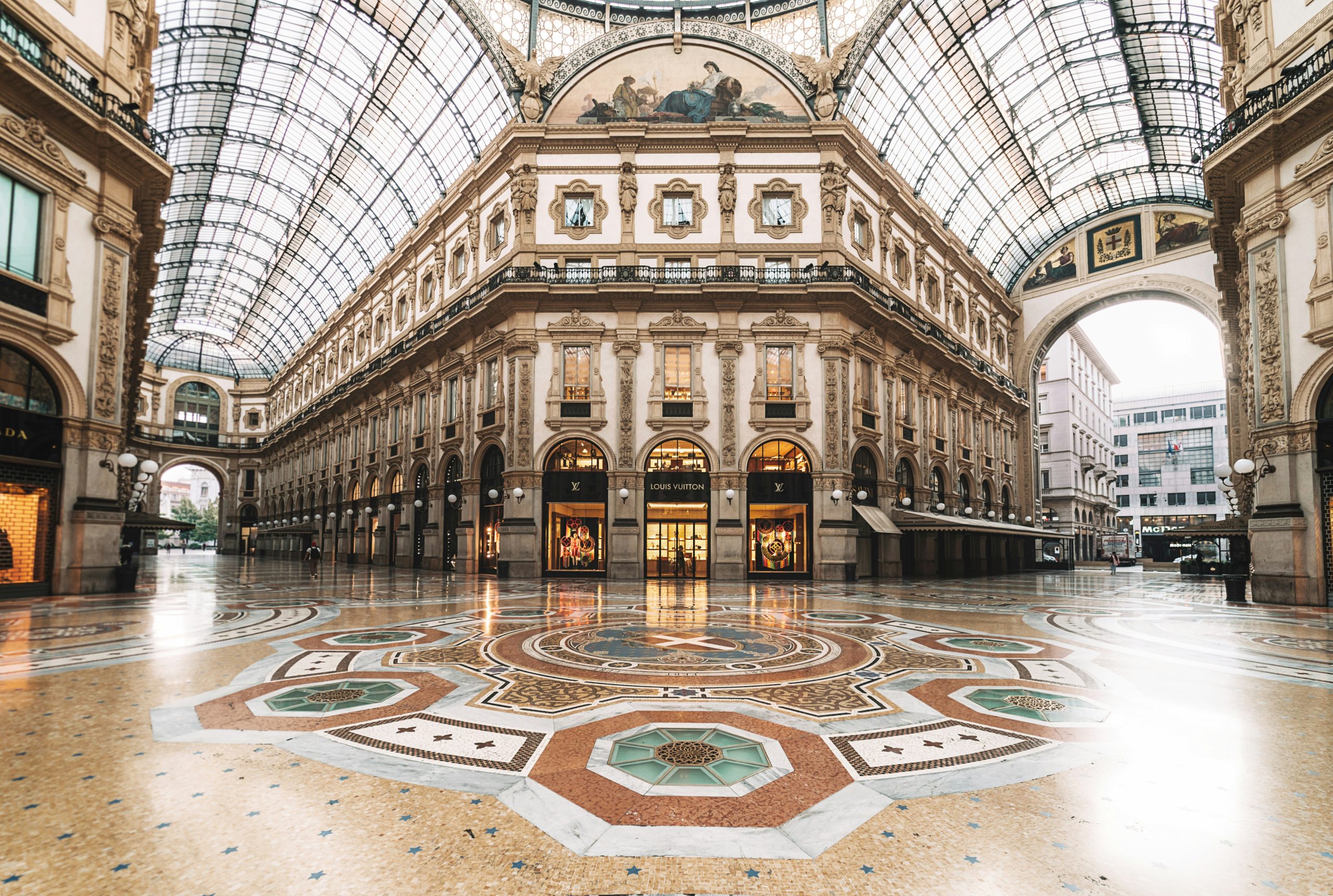
Step into the Galleria Vittorio Emanuele II – the world’s oldest shopping mall, and maybe the most beautiful. High-end shopping under a soaring glass dome. Even if you can’t afford much (and you probably can’t), just wander. Spin your heel on the bull mosaic on the floor – legend says it brings luck. Don’t worry if you slip. Everyone does.
Then head to Palazzo Reale di Milano, the 18th-century royal palace that now hosts major art exhibitions. The dim lighting adds atmosphere, and the exhibits change often – check what’s showing before you go.
Here’s the Milanese ritual you need to adopt: aperitivo. Order a drink. Get a buffet of snacks. Stay for hours. It’s not dinner. It’s “pre-dinner,” though sometimes it turns into dinner, and that’s perfectly fine.
Head to the Navigli district – the canal area that glows at sunset. Find a bar by the water. Order a Negroni (it’s Italy, after all). Watch the world drift by on boats that probably cost more than your apartment.
This is not a drill. This is Milan.
You cannot visit Milan and skip The Last Supper by Leonardo da Vinci. It’s not optional. It’s practically a rule.
Santa Maria delle Grazie is a lovely church. The refectory next door holds one painting. Fifteen minutes. That’s all you get. And it’s enough.
You’ll need to book tickets months ahead. If you can’t, try a guided tour. If that fails, look for a private viewing (if you can spare a kidney). However you manage it, just see it. It’s not just about the painting. It’s about standing before something that changed Western art, and feeling very small.
Pro tip: There’s a hidden gem nearby – Leonardo’s own vineyard. The “Vigna di Leonardo” was a gift from the Duke of Milan. You can visit it. And yes, they do wine tastings on Saturdays. That’s right. Leonardo’s grapes.
The Castello Sforzesco is a 15th-century fortress that looks exactly like you’d imagine: grand, a bit intimidating, and full of museums. Michelangelo’s final sculpture – the Pietà Rondanini – is here. It’s unfinished, which somehow makes it more powerful.
Then wander to the Brera district – Milan’s artistic soul. Cobbled lanes, galleries, and the Pinacoteca di Brera, home to one of the best Renaissance art collections anywhere. Raphael. Caravaggio. Mantegna. It’s all there.
Pro tip: Wednesday afternoons from 4pm, entry is free. Arrive early to queue. Your wallet will appreciate it.
You can’t afford this. I can’t afford this. But we’re looking anyway.
The Quadrilatero della Moda is the fashion district – Via Montenapoleone, Via della Spiga, Via Sant’Andrea. Every luxury brand you know has a store here. The windows are art. The people inside look like they’ve never eaten bread. It’s glorious.
Even if you’re not buying, walk these streets. In 2026, the fashion houses go all out for events – especially during the Olympic year. You might stumble into a Fendi installation or a Gucci exhibition without even trying.
Pro tip: If you’re here in April, you might catch Fuorisalone – Milan’s design week. The city turns into a celebration with installations from Veuve Clicquot, Fendi, Gucci, Prada, and Loro Piana. It’s like fashion week, but with furniture.
The Teatro alla Scala is the most famous opera house in the world. Even if opera isn’t your thing (and let’s be honest, it’s not for everyone), the building is worth seeing.
Take a guided tour. See the boxes, the stage, the grand hall. Then visit the museum, filled with costumes, instruments, and portraits of legends. Maria Callas. Luciano Pavarotti. The greats.
Pro tip: If you can get tickets to a performance, do it. Even if you nod off (and you might, opera is long), the experience stays with you.
Here’s something most visitors miss. Hidden inside the Galleria Vittorio Emanuele II is a “secret elevator” that takes you to the top of the arcade. The view overlooks Piazza Duomo and the cathedral spires. Go at sunset. It’s magic.
You need to book tickets online first. Do it. You’ll thank me later.
The Navigli district deserves a second visit – this time by day. Walk the canals, browse the vintage shops, and find the quieter lanes where locals actually live.
There’s a flea market on the last Sunday of every month. If you’re lucky enough to be there, go. Bring cash. Bring patience. And your best bargaining face.
Right. This is what you came for.
Milan in 2026 has 19 Michelin-starred restaurants: 14 with one star, 4 with two, and 1 with three. Yes, really. Nineteen.
Enrico Bartolini al Mudec is the only three-star restaurant in Milan. Inside the Mudec – the Museum of Cultures – it serves what can only be called edible art. The motto is “BE Contemporary Classic”. The must-try dish is “Oil and lime buttons with cacciucco and octopus sauce”. I don’t know what that means either, but apparently it’s amazing. One reviewer called their rosemary pancakes “ordinary appearance, extraordinary taste – thin, crispy, fluffy, and full of fragrance.”
Milan isn’t Rome. It isn’t Florence. It doesn’t have ruins on every corner or statues in every square.
What Milan has is style. Confidence. A quiet power that rewards those who take the time to notice it. It reveals itself slowly, through the perfect risotto, the perfect suit, the perfect espresso at the perfect marble bar.
Five days is enough to get a taste. Five days with a Michelin-starred meal? That’s enough to fall in love.
Now I need to book a flight. And maybe some stretchier trousers…
by ROBERTO SALVINI