



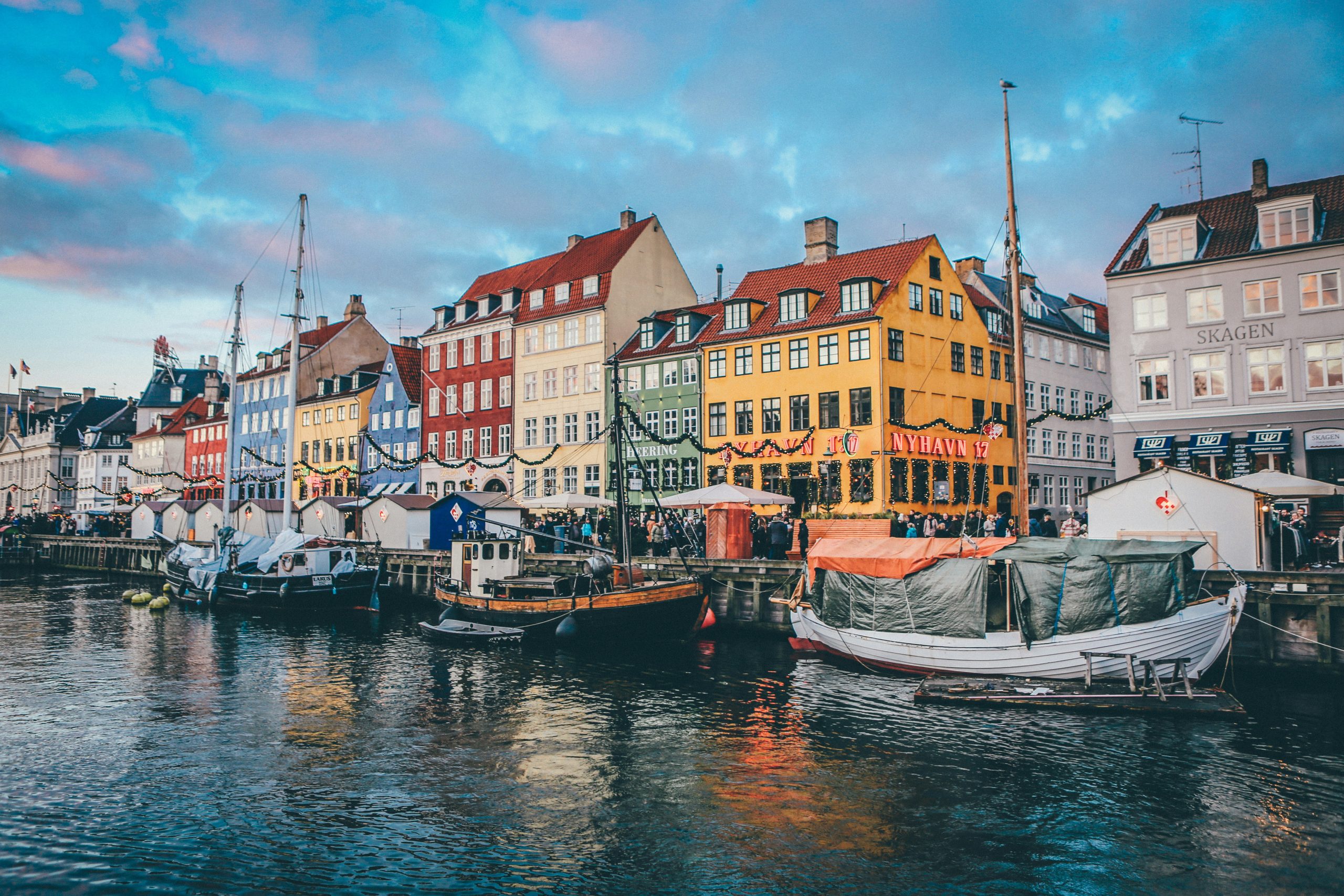
On the European jazz scene, if New Orleans and New York represent the American roots and Paris the inter-war enthusiasm, Copenhagen represents something deeper, more lasting, something that has become woven into the city’s fabric. It does not crow with screams, but through more than half a century of taking in outsiders, respecting artists and allowing music to permeate the everyday life, it has quietly become one of the continent’s most substantial jazz cities. Anyone who seeks to understand how jazz crosses the border and takes root in foreign soil, Copenhagen is an indispensable study.
A City of Sanctuary: The Second Home of American Jazz Exiles
The close connection between Copenhagen and jazz began at a particular historical juncture. In the fifties and sixties, while racial segregation was still firmly established in the U.S. and the civil rights movement was still in its infancy, wave after wave of the greatest African American jazz artists came to the Danish capital. The great saxophonists Stan Getz and Dexter Gordon arrived, Chet Baker, Quincy Jones, pianist Kenny Drew came and finally died and was buried in Copenhagen.
What they were attracted to was not simply economic opportunity or linguistic convenience. The Danish pianist and composer Niels Lan Doky says that jazz is the most perfect expression of democracy in action, it is discipline and freedom in perfect coexistence. In an interview, he has pointed out that many American musicians chose Denmark because they experienced a respect they had not felt in their homeland. They were treated as artists rather than as entertainers. That fine distinction meant creative dignity to the African-American musicians who fled the segregation and the commercial exploitation.
This sanctuary was not one-way traffic. The American musicians brought the most advanced ideas and techniques that collided with the Danish players and produced tremendous sparks. Danish musicians like Alex Riel, Niels Henning rsted Pedersen and Palle Mikkelborg, got their international breakthrough by long-term collaboration with American masters. In the southern suburb of Copenhagen, the Sluseholmen area is silently commemorated by seven streets named after the American musicians who once lived and played there: Richard Boone, Kenny Drew, Dexter Gordon, Thad Jones, Oscar Pettiford, Ben Webster and Ernie Wilkins. These names on the streets have a closer relation to daily life than monuments.
Montmartre and the Underground Tradition: From Resistance to Revival
Jazz roots in Copenhagen go back even further than the emigration of the 1950s. During the Nazi occupation of Denmark, Joseph Goebbels denounced jazz as a “degenerate” music, but the Danes didn’t surrender; they continued to play in hidden places, in cellars, and their music became an act of resistance. After the war, this underground passion became a public celebration, and Montmartre’s Music House, opened in 1959, became the symbol of this transformation and immediately became one of Europe’s most important jazz houses, the European counterpart to New York’s Village Vanguard. On a good night, Dexter Gordon was on the platform while Miles Davis sat in the audience.
The Montmartre closed its doors in the nineties, but its spirit has not ceased to live on. The Montamartre was reopened on the same site with a renewed commitment to the live jazz scene, now led by American pianist Justin Kauflin and Danish bass player Thomas Fonnesbaek, with the presence of the Portuguese-Danish singer Sahra da Silva, the transatlantic dialogue has been kept up.
In the meantime, the jazz culture in Copenhagen maintains an important sense of hierarchy and layering. A few steps away is La Fontaine, the oldest jazz bar in the city, which seats barely a hundred and which offers a regular jam session for young and promising musicians: “All who play in Copenhagen come here,” says Lan Doky. Across from Rosenborg Castle, opposite the National Museum, is the venue Epicurus, where restaurant, bar and hidden jazz hall in a 19th-century romantic building meet. In the same space, the audience is often dressed up and enjoys world-class performances with elegant cocktails and food. From the underground to the exclusive, from improvisation to the composition, Copenhagen accommodates different faces of jazz in different places.
Summer Carnival and Winter Whispers: Two Rhythms of One City
The most concentrated manifestation of Copenhagen jazz is no doubt the Copenhagen Jazz Festival in July, which, since its establishment in 1979, has become one of the most important music events in Europe. The year 2026 is the 48th festival, and there are a thousand concerts in more than a hundred places in the city, but the special thing is the total occupation of urban space, and the fact that the audience, although it is a core activity in the opera house, in the Tivoli, and in Jean Nouvel’s concert house, is really in the street, squares, churches, cafés, and quays. The audience can enjoy coffee and listening to an open-air concert in the morning, or in a packed jazz club at night. The festival also has a program called “Jazz for Children” where family audiences can enjoy music and games in the parks. This all-encompassing invasion makes Copenhagen a jazz city without walls in July.
But for those who arrive at year’s end, Copenhagen reveals a different, more intimate face; December is nothing like midsummer, jazz is indoors in the warm and shady clubs. In mid-December, the Montmartre programme lists three performances with Justin Kauflin and Thomas Fonnesbk with the label “last chance” and on December 15 the annual Christmas concert of the Danish jazz singer Cecilie Norby is already sold out. At Christiania jazz they offer tickets at a reasonable price of one hundred kroner and on 13 December they present the trio of Oscar Ployart, on 16 December the duo of Heise and von Blow and on 18 December the Kresten Osgood quintet – which has been described as the best Danish jazz since the 1970s.
Around the 20th of December, the Christmas decorations come down, and the city begins to change pace for the new year. On New Year’s Eve, Copenhagen’s central event is not in the jazz clubs, but at the city hall square, where, at six in the evening, many Danish families watch the New Year’s speech; at midnight, the bells ring, fireworks burst over the city, and people raise glasses of champagne or the traditional Kransekag to each other. The city reminds the tourists in its own way that jazz is Copenhagen’s soul, but the New Years’s celebration is a public one, and it is therefore to the citizens’ own celebration that the city gives the midnight ring. For those who want to celebrate the New Yar in music, Montmartre has booked a night with Bobo Moreno and the Soul Shockers for the 29th, and another night with him and two Montmartré veterans for the 30th—both of which are sold out.
Why a Capital: An Answer About Acceptance and Continuity
Calling Copenhagen “the jazz capital of Europe” is not meant to deny Paris’ historical reputation or London’s commercial energy. The claim’s validity lies in one distinctive characteristic: continuity. From underground resistance during the Nazi occupation to a haven for American exiles in the fifties, from the golden age of Montmartre to today’s multifaceted scene, Copenhagen’s embrace of jazz has never been broken. This embrace is not driven by curiosity-driven consumption or a museum-style preservation but a constant two-way shaping: American musicians found a dignified platform here, Danish musicians travelled the world from here, and a city has learned to define its cultural character through jazz’s improvisation and dialogue.
As Lan Doky says, jazz is “freedom and discipline existing together”. Copenhagen seems to know this in a direct way. It gives the musicians freedom: People from every corner of the world can find a stage here, whether it’s under the spotlights at Montmartre or at La Fontaine’s jam sessions; it maintains discipline: respect for the art, trust in listeners, conscious continuity of tradition. Seven streets named after American musicians, an old club revived, a thousand concerts in the summer and dozens of intimate winter nights – these concrete elements show a seventy-year-old devotion to a music. On the European continent, no other city probably shows so quietly and consistently how deeply jazz can be part of a capital city’s breathing and heartbeat.
Jazzhus Montmartre
This legendary club offers an optional dinner before the concert on Thursdays, Fridays, and Saturdays. Dinner starts at 18:00, and the concert begins at 20:00. You can add the meal when buying your ticket (main course 295 DKK, or 375 DKK with dessert). The menu changes every 4–6 weeks and is provided by the neighboring restaurant LEVI. Note that there are only 30 table seats for dining, and they sell out quickly. Dining is not allowed during the concert itself .Official website: https://www.jazzhusmontmartre.dk/en
Axelborg Bodega
A historic Copenhagen institution since 1918, serving traditional Danish classics like smørrebrød, wienerschnitzel, and stegt flæsk. It hosts free live jazz every Sunday afternoon (17:00–20:00). Booking a table is recommended, especially for the jazz sessions .Official website: https://www.axelborgbodega.dk/english/
Epicurus
An underground venue combining a restaurant, bar, and jazz club, curated by pianist Niels Lan Doky. The restaurant serves seasonal dishes (e.g., Arctic char, grilled beef), and you can pair your evening with a cocktail or wine flight. The crowd often dresses up, and the jazz performances are part of rotating residencies .Official website: https://epicurus.dk/
Cap Horn
Located in the Nyhavn district, this historic restaurant serves classic smørrebrød and seasonal plates. It hosts regular live jazz concerts (often duos or small ensembles) that provide an intimate musical backdrop for dinner. Booking a table is highly recommended if you plan to dine during a performance .Official website: https://www.caphorn.dk/
RENE SHUBERT