



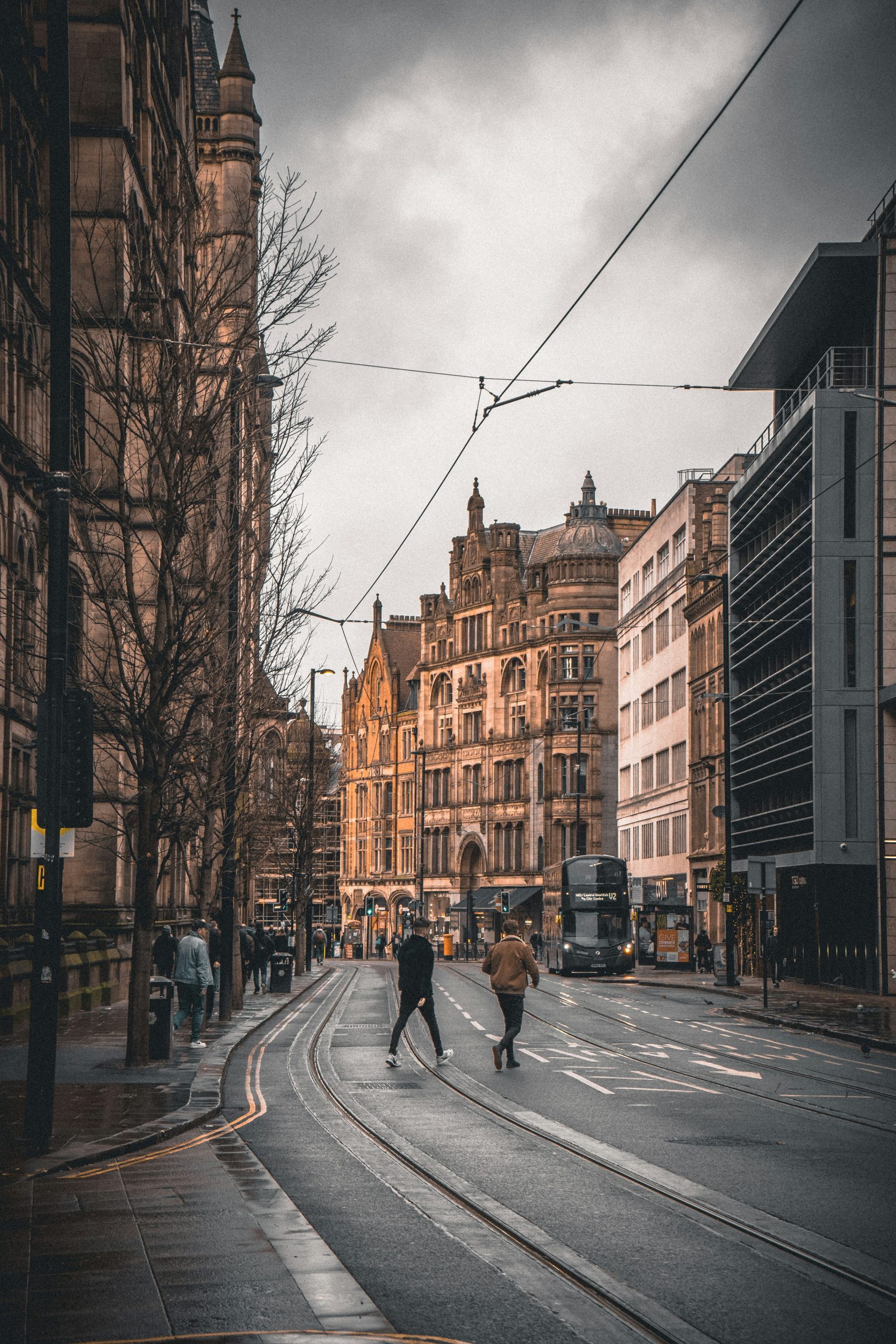
BEFORE you finish reading this, someone in the Northern Quarter will have discovered a “life-changing” natural wine, while someone in the Baltic Triangle will be arguing about whether that wine is actually any good.
Two cities. Thirty-five miles apart. A rivalry so fierce it makes the Hatfields and McCoys look like they were just messing about.
On one side: Manchester. Industrial powerhouse turned cultural behemoth. Home to Victorian Gothic libraries that look like Hogwarts, Michelin-starred pizza, and canals where old warehouses have been reborn as cocktail bars. It’s the city that gave the world Oasis, Factory Records, and the suspicion that your train might actually be cancelled.
On the other side: Liverpool. Maritime majesty. Beatles birthplace. A waterfront so beautiful UNESCO once had it on its World Heritage list (before taking it off, causing a city-wide sulk that lasted approximately three hours). It’s the city that gave the world The Beatles, scouse (both the accent and the stew), and an unshakeable belief that it’s actually the best city in the country.
This isn’t a price comparison. We’ve done that. This is about experience. This is about where you’d rather be on a rainy Tuesday in November, clutching a pint and wondering why you didn’t bring a coat.
Welcome to the ultimate North West smackdown: three days in each city, no expenses spared (except your dignity, which left somewhere around the third course).
MANCHESTER: THE INDUSTRIAL PLAYGROUND
Day One: The History Lesson (With Better Beer)
Morning: Harry Potter, But Make It Victorian
Start your Manchester odyssey at Manchester Piccadilly Station. Not because it’s beautiful (it’s functional, like most things in Manchester) but because everything worth seeing radiates from here.
First stop: The John Rylands Library on Deansgate. This isn’t a library. It’s a cathedral built for books. Victorian Gothic architecture so absurdly grand it makes Oxford look like a Travelodge. You half expect Daniel Radcliffe to pop out from behind a bookshelf and start casting spells. The reading room has vaulted ceilings, stained glass windows, and a silence so profound you can hear your own soul reflecting on poor life choices.
The library houses a collection of medieval manuscripts, including a St. John fragment from around 300 AD. That’s not a typo. Three hundred. Before the Romans left. Before anyone had invented the concept of “queueing properly.”
Pro tip: Entry is free. Yes, free. In 2026. In this economy. The building itself is the attraction. You don’t need to read anything. Just walk around with your mouth open. No one will judge.
Afternoon: Trains, Steam, and Industrial Grime
From Hogwarts, walk ten minutes to the Science and Industry Museum on Liverpool Road. This is where Manchester reminds you that it didn’t become a global city by being pretty. It became a global city by inventing the modern world.
The museum sits on the site of the world’s first passenger railway station – Liverpool Road Station, opened 1830. Inside, you’ll find massive steam engines, textile mills reconstructed in loving detail, and the world’s oldest surviving passenger railway locomotive. It’s loud. It’s dusty. It’s brilliant.
Entry is also free, because Manchester believes in educating the masses, presumably so they can go back to working in factories. Very on-brand.
Late Afternoon: The Castlefield Canals
As the light softens (or, more realistically, as the rain begins), head to Castlefield. This is Manchester’s canal basin – a network of waterways lined with converted warehouses, railway viaducts, and Roman ruins.
Yes, Roman ruins. Castlefield was Mamucium, a Roman fort established around 79 AD. The Romans were here, building roads and aqueducts and probably complaining about the weather. Some things never change.
Walk along the canals as the city lights begin to reflect on the water. The old brick warehouses have been transformed into flats, bars, and restaurants. It’s industrial chic before the phrase was invented. For street photography, it’s gold.
Evening: Dinner at Rudy’s Pizza, Ancoats
Here’s the secret that chefs don’t want you to know: Rudy’s Neapolitan Pizza in Ancoats is the best pizza in the North West. Chefs themselves admit they come here for “inspiration when perfecting dough and toppings”. That’s chef-speak for “we can’t make it this good ourselves and it makes us angry.”
The pizza is authentic Neapolitan – wood-fired, blistered crust, toppings so fresh they might still have passports. The Marinara (tomato, garlic, oregano, olive oil) costs about £8 and will change your relationship with bread. The Margherita is perfection. The Calabrese (spicy sausage) will make you consider moving to Ancoats permanently.
Ancoats itself is worth the visit. Once the world’s first industrial suburb (cotton mills, dark satanic mills, all that), it’s now a foodie paradise. The area hums with energy.
Drinks: The Northern Quarter
After pizza, wander into the Northern Quarter. This is Manchester’s creative heart – a grid of streets filled with indie coffee shops, vintage stores, record shops, and bars that take themselves exactly the right amount of seriously.
Trof on Thomas Street is a Northern Quarter institution. The Whiskey Jar has an American whiskey selection that would make a Tennessee distiller weep. And if you want something weird, somewhere in the Northern Quarter will serve it to you in a jam jar.
Afflecks Palace (indoor market of indie weirdness) is closed by evening, but the area’s energy peaks after dark. Street art covers every available wall. The smell of sourdough and hope hangs in the air.
The Experience Verdict (Day One): Manchester’s industrial heritage is worn as a badge of honour, not a burden. The canals, the mills, the railways – they’re all here, repurposed, loved, and occasionally served with a side of sourdough. Liverpool can’t match this specific vibe, because Liverpool’s heritage is maritime, not industrial. Different beasts. Both magnificent.
Day Two: Football, Fashion, and Finding Yourself in a Vintage Shop
Morning: The Cathedral of Football
You cannot come to Manchester and ignore the football. Even if you don’t like football. Even if you think “offside” is a type of relationship status. You must go.
Choose your allegiance:
- Old Trafford (Manchester United): Seats 74,000. The Theatre of Dreams. Has a museum, a stadium tour, and a megastore so large it could be a sovereign nation. The tour takes you through the tunnel, into the dressing rooms, and pitchside. You don’t have to be a United fan to feel the weight of history. Book online in advance – match days mean closed tours.
- The Etihad Stadium (Manchester City): Seats 53,400. The newer, shinier, more “we have oil money” option. Also offers tours. Also has a megastore. Also will sell you a scarf in colours you didn’t know existed.
- The National Football Museum: If stadiums aren’t your thing, head to the city centre. The National Football Museum is in the Urbis building near Victoria Station. It’s free (mostly) and contains the FIFA World Cup trophy, Pele’s boots, and enough nostalgia to make your dad cry.
Pro tip: Book stadium tours online well in advance. They sell out. And check match schedules – you don’t want to arrive on a match day expecting a tour and finding 74,000 people instead.
Afternoon: The Northern Quarter (Again, But Deeper)
Return to the Northern Quarter for the proper exploration. This time, go deeper.
Afflecks Palace is a multi-floor emporium of the weird and wonderful. Vintage clothes, alternative fashion, crystals, records, vegan sweets, handmade jewellery, taxidermy (yes, taxidermy) – if it exists and is slightly off-centre, it’s probably here. Spend an hour. Or three.
The street art in the Northern Quarter is world-class. Look for the mural of Tony Wilson (Factory Records founder) on the side of Afflecks. Look for the bee murals (Manchester’s symbol of industry and unity). Look for anything by local artist Akse, whose monochrome portraits are stunning.
For coffee, hit Ezra & Gil on Hilton Street or Idle Hands on Dale Street. These are not “grab a latte and leave” places. These are “sit and watch the world go by while pretending to work on your novel” places. The pastries are exceptional. The coffee is better.
Evening: Spinningfields and 20 Stories
As night falls, head to Spinningfields. This is Manchester’s financial district, but unlike Canary Wharf (sterile, corporate, soul-crushing), Spinningfields has charm. It’s built around old buildings, with canalside walks and a mix of high-end restaurants and casual bars.
The crown jewel is 20 Stories. This rooftop bar and restaurant sits on the 20th floor of No.1 Spinningfields. The views are ridiculous – the city spread out below, the Pennines in the distance, the sun setting (if you’re lucky) over the Cheshire plain.
The cocktails are £12-15. The dress code is “smart”. The vibe is “I could get used to this.” For dinner, the food is excellent (try the steak), but even just a drink at the bar is worth the trip.
Afterwards, if you have energy, Canal Street in the Gay Village is where Manchester’s nightlife explodes. Rainbow flags, drag queens, and dancing until 4am. It’s inclusive, it’s loud, and it’s one of the best nights out in the country.
The Experience Verdict (Day Two): Manchester’s cultural confidence is off the scale. The Northern Quarter feels genuinely creative, not manufactured. The Gay Village is a beacon. And 20 Stories proves that Manchester can do glamour without losing its soul. Liverpool has the Beatles. Manchester has itself, and that’s enough.
Day Three: Culture, Canals, and a Proper Send-Off
Morning: The Manchester Museum
Heaton Park, Manchester Cathedral, and the Manchester Museum. Today, we’re doing the museum.
The Manchester Museum is part of the University of Manchester (the same university where Rutherford split the atom and where Alan Turing worked). It’s a Victorian building stuffed with Egyptian mummies, dinosaur skeletons, and enough taxidermy to make you question your life choices.
The Egyptian collection is world-class. Two galleries of mummies, sarcophagi, and funerary goods. The dinosaur gallery has a T-Rex skeleton. The vivarium has live frogs, snakes, and lizards.
Entry is free. Donations encouraged.
Afternoon: Mackie Mayor Food Hall
Lunch at Mackie Mayor in the Northern Quarter. This Grade II listed building was once a meat market. Now it’s a food hall filled with independent traders. Burgers, bao buns, oysters, tacos, pizza, cake, coffee, craft beer – everything is here.
Chefs love Mackie Mayor for “variety and quality in one spot”. Translation: you can eat a small plate from Honest Crust (sourdough pizzas), then a taco from Taco Tuesday, then a doughnut from Siop Shop, and no one judges you.
Grab a seat in the main hall, under the vaulted ceiling, and watch the city eat. It’s chaotic. It’s delicious. It’s Manchester.
Late Afternoon: The Choice Is Yours
Depending on your energy levels and interests:
- Manchester Cathedral: Free entry. Medieval architecture. In the heart of the city near Victoria Station. Peaceful, beautiful, and a nice contrast to the chaos of the Northern Quarter.
- Heaton Park: If the weather holds (and that’s a big “if”), take the tram north to Heaton Park. It’s one of the largest municipal parks in Europe. There’s a boating lake, a golf course, and a farm. And a tram museum (because of course there is – this is Manchester).
- Shopping: The Arndale Centre is massive, chaotic, and contains everything. It’s the city’s main shopping hub. Not romantic. But efficient.
Evening: Indian Feast at Sangam
Manchester has one of the best Indian food scenes in the UK. The Curry Mile in Rusholme is famous, but Sangam on Portland Street is central, authentic, and beloved by locals.
Order the lamb rogan josh, the garlic naan, the pilau rice, and a Kingfisher beer. The aromas will follow you home. The prices are reasonable. The service is friendly.
Final Drink: A Proper Pub
End your Manchester adventure in a proper pub. Not a gastropub. Not a cocktail bar. A pub. Britons Protection near Deansgate has been serving pints since 1800s. It has a heated courtyard, a fireplace, and the kind of sticky carpet that says “we’ve seen things.”
Order a pint of local ale (the bar staff will recommend one). Find a corner. Reflect on three days in this glorious, grimy, glorious city.
The Experience Verdict (Day Three): Manchester is a city that doesn’t need to try. It’s confident in its industrial past, its musical heritage, its football obsessions. The food scene is excellent. The people are friendly (once you get past the “why are you talking to me” exterior). It’s not pretty like Bath. It’s not grand like London. It’s Manchester. And that’s more than enough.
LIVERPOOL: THE MARITIME MASTERPIECE
Day One: The Waterfront and The Beatles
Morning: The Royal Albert Dock
Start your Liverpool odyssey where Liverpool started – at the Royal Albert Dock. This UNESCO World Heritage site (until 2021, when UNESCO took it away, sparking a city-wide “we don’t care anyway” response that fooled absolutely no one) is the heart of the city.
The dock opened in 1846. It was the first enclosed, non-combustible dock system in the world. Translation: warehouses made of cast iron, brick, and stone that wouldn’t burn down like the old wooden ones. It revolutionised maritime trade. Liverpool was once the gateway to the British Empire. Everything came through here – cotton, tobacco, sugar, spices, and (darkly) enslaved people.
Today, the dock is a leisure complex. The Merseyside Maritime Museum is here, telling the story of the city’s seafaring past. The Tate Liverpool (Tate’s northern outpost) is here, showing modern art. The Beatles Story museum is here, taking you through the lives of the Fab Four.
But the best thing about the dock is just walking. The red brick warehouses, the cobbled streets, the views across the Mersey to Birkenhead (yes, Birkenhead. It’s not pretty. But it’s there). The Pier Head is where the “Three Graces” stand – the Royal Liver Building (with the mythical Liver Birds on top), the Cunard Building, and the Port of Liverpool Building.
Take a photo with the Liver Birds. Legend says that if one flies away, the city will fall. Neither bird has ever moved. They’re made of copper.
Pro tip: The Mersey Ferry offers 50-minute River Explorer Cruises. The views of the waterfront from the river are spectacular. And you can sing “Ferry Cross the Mersey” without anyone judging you. Much.
Afternoon: The Beatles Pilgrimage
You cannot come to Liverpool and ignore The Beatles. It’s like going to Paris and ignoring the Eiffel Tower. It’s mandatory.
The Beatles Story at the Albert Dock is the world’s largest permanent exhibition about the band. It’s immersive, detailed, and slightly overwhelming. Replicas of the Cavern Club stage, recording studios, and the famous Apple Corps building. Original instruments, handwritten lyrics, and enough memorabilia to make a collector weep.
But the real pilgrimage is to Mathew Street, to the Cavern Club. The Beatles played here 292 times between 1961 and 1963. The original club was demolished in 1973 (Liverpool was going through a “let’s knock everything down” phase). The current club is a reconstruction, built using original bricks, on the original site.
Go inside. It’s underground, brick-vaulted, sweaty, and loud. Live music plays constantly. You can stand on the same stage where The Beatles became The Beatles. Order a pint. Clap along to “Twist and Shout.” Cry a little. It’s fine. Everyone does.
The statue of John Lennon outside the Cavern is a popular photo spot. The statue of the band on the Pier Head is also great – larger-than-life bronze figures walking towards you.
Evening: Small Plates at Maray
Maray on Bold Street is where Liverpool’s food scene shines. Small plates. Big flavour. Always busy. Chefs themselves admit they come here for the inventive menu. That’s high praise.
The menu changes seasonally, but expect things like: lamb kofta with pomegranate molasses, fried cauliflower with tahini and za’atar, octopus with chorizo and smoked paprika. The wine list is excellent and reasonably priced.
The Quarter on Hope Street is another chef favourite – seasonal ingredients, approachable dishes, and a stylish but unpretentious vibe.
Drinks: Baltic Triangle
After dinner, head to the Baltic Triangle. This is Liverpool’s creative quarter – a former industrial area (warehouses, workshops, railway arches) transformed into a hub of independent bars, art spaces, and street food.
The Baltic Market is a street food hall with rotating vendors, craft beer, and live DJs. Chefs love it for “seeing new concepts in action”. You’ll love it for the loaded fries and the energy.
Cains Brewery Village is nearby – a former brewery turned into a microbrewery, gin distillery, street food market, and bars. Camp and Furnace is a warehouse-turned-bar with a massive outdoor area, ping pong tables, and a wood-fired pizza oven.
The Experience Verdict (Day One): Liverpool’s waterfront is world-class. No argument. The combination of maritime history, Beatles nostalgia, and modern regeneration is intoxicating. Manchester has canals; Liverpool has the Mersey. Different water. Different vibe. Both beautiful.
Day Two: Cathedrals, Culture, and the Georgian Quarter
Morning: The Two Cathedrals
Liverpool has two cathedrals. One Catholic, one Anglican. They sit at opposite ends of Hope Street, staring at each other across the city. The rivalry is friendly. The architecture is not.
Liverpool Cathedral (Anglican) is the largest cathedral in Britain and the fifth largest in the world. It was designed by Sir Giles Gilbert Scott (who also designed the red telephone box). Construction started in 1904 and finished in 1978 – 74 years. The result is a brutalist-gothic masterpiece: massive, imposing, and surprisingly beautiful inside.
Climb the tower. 108 metres high. 331 steps. The views across Liverpool, the Mersey, and as far as Snowdonia on a clear day are worth every gasp.
The Metropolitan Cathedral (Catholic) is the opposite. Nicknamed “Paddy’s Wigwam” (because of its shape and Liverpool’s Irish heritage), it’s a circular concrete and glass structure built in the 1960s. It seats 2,000 people. It looks like a spaceship landed on Hope Street and decided to stay.
Together, they represent Liverpool’s religious diversity and its willingness to try anything architecturally.
Pro tip: Walk between the cathedrals along Hope Street. It’s a Grade II listed Georgian street lined with beautiful townhouses, independent shops, and cafes. The Philharmonic Dining Rooms on Hope Street is a Grade I listed pub with the most magnificent gents’ toilets you’ve ever seen. Marble, brass, stained glass. Go even if you don’t need to go.
Afternoon: The Georgian Quarter
The area around Hope Street and Rodney Street is Liverpool’s Georgian Quarter. It’s the city’s most beautiful neighbourhood – rows of Georgian townhouses, cobbled side streets, and quiet squares.
The Everyman Theatre on Hope Street is a Liverpool institution – a repertory theatre that launched the careers of countless actors. The building is modern (a rebuild after a fire in 2011), but the spirit is old.
The Liverpool Central Library on William Brown Street is worth a visit – the Picton Reading Room is a circular, domed space that feels like a Victorian gentleman’s club. Free entry.
Late Afternoon: The Beatles (More Beatles)
You thought you were done with The Beatles? You’re never done with The Beatles in Liverpool.
The Magical Mystery Tour is a bus tour that takes you to the childhood homes of John Lennon, Paul McCartney, and George Harrison. Penny Lane. Strawberry Field. The places that inspired the songs.
Strawberry Field is a Salvation Army children’s home where John Lennon played as a child. The red gates are iconic. The garden is now a peace garden. You can visit.
Penny Lane is a real street. The barber shop is still there (though not the one from the song). The roundabout has a large sign. It’s surprisingly normal. That’s the point.
Evening: Spanish Tapas at Lunya
Lunya on Bold Street is a Spanish deli and restaurant that does small plates properly. Chefs enjoy it for “sampling different small plates and taste-testing new flavour combinations”.
Order patatas bravas (crispy potatoes with spicy tomato sauce), jamón ibérico (cured ham that melts on your tongue), pan con tomate (bread with tomato, garlic, and olive oil – simple but sublime), and a pitcher of sangria.
The deli section sells Spanish ingredients – you can take a bit of Spain home with you.
Late Night: A Speakeasy or a Wine Bar
Plere on Beech Road is a wine bar that brings “Europhile cool” to Liverpool. Under-the-radar wines, cheese, charcuterie. The vibe is sophisticated but not pretentious. If George Orwell’s perfect pub was The Moon Under Water, then Emile Zola’s would be Plere. That’s the quote. I didn’t write it. But I agree.
For a speakeasy, find The Oracle (if you can). Hidden bars are a Liverpool speciality. Ask a local.
The Experience Verdict (Day Two): Liverpool’s Georgian Quarter rivals anything in Bath or London. The cathedrals are spectacular. The Beatles pilgrimage is genuinely moving (even if you’re not a fan). Manchester has industrial chic; Liverpool has Georgian elegance. Different aesthetics. Both valid.
Day Three: Museums, Markets, and Proper Scouse
Morning: The Museum of Liverpool
The Museum of Liverpool at the Pier Head is the world’s first national museum dedicated to a regional city. That’s a mouthful. What it means: this museum tells the story of Liverpool and its people.
The building is modern (opened 2011), with sweeping curves and floor-to-ceiling windows overlooking the Mersey. Inside, galleries cover everything from the city’s maritime history to its musical heritage to its football obsessions to its sense of humour.
The history of The Beatles is covered in depth. The history of Liverpool FC and Everton FC is covered (including the infamous “we won more than you” displays). The history of the city’s Chinese community is covered. The history of the city’s LGBTQ+ community is covered.
It’s comprehensive. It’s heartfelt. It’s free (donations encouraged).
Afternoon: Liverpool ONE and Bold Street
For shopping, Liverpool ONE is an open-air retail complex next to the waterfront. It has all the usual suspects – John Lewis, Apple, Zara, etc – but the design is surprisingly pleasant. Rooftop gardens. Public art. A cinema. Restaurants.
Bold Street is the independent heart. Independent bookshops (News from Nowhere is a radical bookshop – feminist, left-wing, brilliant). Independent cafes (Rough Handmade is tiny and perfect). Independent restaurants (Maray, Lunya, and more).
Fact Liverpool on Wood Street is a cinema and arts centre showing independent films. If you need a break from shopping, see something weird.
Late Afternoon: The Williamson Tunnels
Here’s Liverpool’s hidden gem. The Williamson Tunnels are a network of underground tunnels dug by a eccentric 19th-century philanthropist named Joseph Williamson. He was a wealthy tobacco merchant who decided to employ the city’s poor to dig tunnels under the Edge Hill area.
Why? No one knows. Theories include: he was preparing for the apocalypse; he was creating a private subterranean world; he was just really, really weird.
The Friends of Williamson Tunnels run tours. You’ll see arches, brickwork, and the most bizarre archaeological site in the country.
Evening: Scouse at the Cathedral
Yes, the cathedral has a bistro. Yes, it serves traditional Scouse – Liverpool’s local stew. Served with homemade bread and pickled cabbage. It’s hearty, warming, and deeply Liverpudlian.
Scouse is a lamb or beef stew with root vegetables, thickened with stock and slow-cooked for hours. It’s not fancy. It’s not Michelin-starred. It’s the food of sailors and workers, of cold winters and big appetites.
Eating Scouse in the cathedral bistro, looking out at the city’s skyline, is the most authentic Liverpool experience you can have.
Alternative Dinner: Leo and Roobs in the Baltic Triangle
Leo and Roobs is a neighbourhood cafe from the folks behind The Black Friar. Fresh, healthy, comforting food whipped up from scratch. The head chef came from Manchester’s Pot Kettle Black, so this is Manchester’s loss and Liverpool’s gain.
Le Viet Social in Chorlton does Vietnamese street food – pho, banh mi, loaded fries. A different flavour, but equally delicious.
Final Drink: A Proper Pub
End your Liverpool adventure at the Philharmonic Dining Rooms. Grade I listed. Opened 1858. The interior is all marble, mahogany, and stained glass. The gents’ toilets are a tourist attraction in their own right.
Order a pint of Cains (local Liverpool brewery) or a Liverpool Gin and tonic. Find a corner. Reflect on three days in this glorious, musical, maritime city.
The Experience Verdict (Day Three): Liverpool’s humour, warmth, and sense of identity are unmatched. The city knows who it is – a port town, a music city, a place that’s been knocked down and rebuilt and knocked down again. And it’s still standing. Manchester is grit. Liverpool is heart. Both are beating strong.
THE FACE-OFF: COMPARING EXPERIENCES
| Category | Manchester | Liverpool |
|---|---|---|
| Industrial Heritage | World-class. The canals, the mills, the Science and Industry Museum – Manchester owns this. | Minimal. Liverpool’s heritage is maritime, not industrial. |
| Maritime Heritage | Minimal. The Ship Canal exists, but it’s functional. | World-class. The Albert Dock, the Mersey, the maritime museums – Liverpool owns this. |
| Music Heritage | Massive. Oasis, The Smiths, Joy Division, Factory Records. The Haçienda (RIP). | Mythic. The Beatles. Need I say more? |
| Football | Two Premier League giants. Stadium tours for both. The National Football Museum. | Two Premier League giants. Passionate fans. But no dedicated football museum. |
| Food Scene | Flashy, ambitious, expanding rapidly. Rudy’s Pizza, Mackie Mayor, 20 Stories. | Friendly, consistent, chef-approved. Maray, Lunya, Baltic Market. |
| Architecture | Victorian Gothic, industrial brick, modern glass. Chaotic but charming. | Georgian elegance, two cathedrals, the Three Graces. More cohesive, more beautiful. |
| Green Space | Heaton Park is huge. But the city feels urban. | Sefton Park is beautiful. But the city feels urban. (Tie.) |
| Nightlife | The Gay Village. The Northern Quarter. Spinningfields. More variety. | The Baltic Triangle. Mathew Street. More concentrated, more intense. |
| “Vibe” | Gritty, confident, creative, slightly suspicious of outsiders. | Warm, musical, proud, will talk to you even if you’re a stranger. |
| Hidden Gems | John Rylands Library (free). The Roman ruins at Castlefield. | Williamson Tunnels (weird). The Philharmonic toilets (iconic). |
| Beatles Factor | Zero. Manchester doesn’t care. | Everything. Liverpool doesn’t shut up about it. |
| Best for a Rainy Day | Museums, cathedrals, libraries, food halls. Plenty of indoor options. | Museums, cathedrals, the Albert Dock arcades, the Cavern Club. Equally good. |
THE VERDICT
Look. This isn’t about picking a winner. Both cities are magnificent. Both will feed you, water you, and send you home with a hangover and a smile.
But if you’re forcing me to choose – based purely on experience, not on price, not on data, not on anything measurable – here’s the truth.
Manchester is the city you go to when you want to feel like you’re at the centre of something new. It’s creative in a way that feels accidental, authentic, unmanufactured. The Northern Quarter hums with independent energy. The food scene is taking risks. The canals are beautiful. It’s not pretty – it’s real. And that realness is intoxicating.
Liverpool is the city you go to when you want to feel like you’ve come home. The warmth is immediate. The humour is constant. The waterfront is spectacular. The Beatles pilgrimage is genuinely moving (even if you’re a cynic). It’s a city that’s been through hell – industrial decline, economic collapse, public ridicule – and emerged with its spirit intact. That’s not nothing. That’s everything.
The honest answer? Do both. Get the train. It’s 45 minutes. Spend three days in Manchester, then three days in Liverpool. Compare them yourself. Argue with your friends. Write a strongly worded letter to the editor.
But if you can only choose one?
Flip a coin. You won’t regret either.
BY JOHN GARAVELAS